

✂️ Orchard Diary: Winter Pruning & Soil Care
📍 Core Task Info
- Task Name: Winter pruning, orchard clearing, and basal fertilization.
- Best Timing: December to February (The golden dormancy period for fruit trees in Southern California).
- Target Objects: Clearing dead wood for deciduous trees (peaches, jujubes, figs), vines (grapes, blackberries), and evergreen trees (citrus, avocados).
- Core Purpose: Storing energy, improving light penetration, breaking the pest overwintering cycle, and laying a solid foundation for explosive blooming and fruiting in the spring.
📖 Why is Winter Care So Important?
In California, although we don’t have severe freezing winters, the deciduous plants in the orchard still enter a precious dormancy period as temperatures drop and daylight shortens. Sap flow is slow right now, making it the absolute best time to bring out the pruning shears.
- Reallocating Energy: Pruning leggy and excess lateral branches forces the fruit trees to direct their limited nutrients strictly to the flower buds in the spring. This directly determines your yield and fruit size for the year.
- Establishing a Microclimate: Early spring in Southern California often brings rain. Timely thinning of the inner canopy allows ventilation and sunlight to penetrate, which greatly reduces the chance of fungal infections.
- Soil Recharging: After a full year of crazy growth and heavy fruiting, the soil nutrients are heavily depleted. Applying basal fertilizer during the winter rainy season allows the moisture to slowly carry organic matter deep into the root zone.
📓 My Orchard Practice Record
January and February are my busiest, yet most enjoyable, times in the orchard. Watching each tree shed its messy overgrowth under my shears and reveal a clear, strong structure is like carving a piece of art.
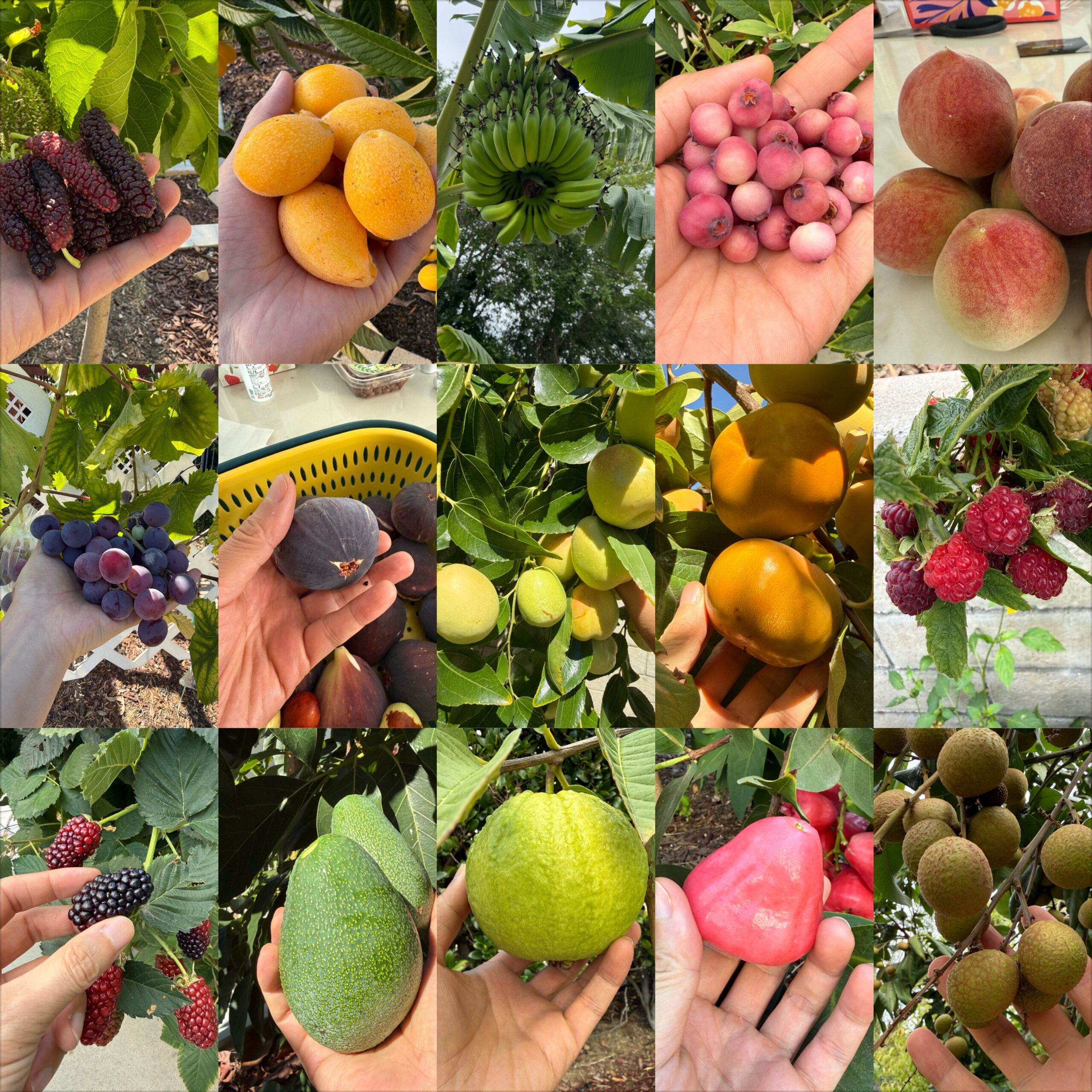
- “Major Surgery” for the Deciduous Group: The White Peach, Donut Peach, and Big-Fruit Hawthorn are my primary focus. I ruthlessly cut off crossing and inward-growing branches to train the canopy into an “Open Center” shape, allowing direct sunlight to reach the inside. The Black Mission Fig and Shanxi Jujube also get appropriate heading back to control their height and stimulate new shoots.
- “Out with the Old” for the Vines: The pruning principles for the Kyoho Grape and Triple Crown Blackberry are simple but must be firm. I cut the grayish-white old vines that fruited last year right down to the base, and tie the newly emerged, strong green vines evenly onto the white trellis.
- “Fine-Tuning” the Evergreen Group: The Washington Navel, Valencia Orange, and Hass/Fuerte Avocados are still lush and green in the winter. For them, I only do very light pruning: removing dead, diseased, or weak branches in the inner canopy, as well as low-hanging branches touching the ground, to prevent soil-borne pathogens from splashing onto the leaves.
🛠️ Key Technical Points
- Sanitize Tools (Prevention First): Between pruning different trees, I always wipe my pruning shears with rubbing alcohol spray or wipes. Especially during the California winter rainy season, unsterilized shears can easily become an accomplice in cross-spreading citrus canker or other diseases.
- Thorough Orchard Clearing: Pruned dead branches, fallen leaves on the ground, and mummified fruits (mummies) left on the trees must all be cleared out of the orchard. This is the most effective physical method to cut off the overwintering lifeline for pests like the Oriental fruit moth and leafminers.
- “Chop and Drop” for Banana Trees: After harvesting the Ice Cream Bananas, the mother plant loses its purpose. I decisively chop it down, cut it into chunks, and pile them directly at the base of the banana clump. They are rich in water and potassium, making them an excellent natural fertilizer.
- Winter Feeding & Mulching:
- Fertilizing: Shallowly bury composted chicken or cow manure around the drip line to provide sufficient NPK (Nitrogen, Phosphorus, Potassium) for spring budding. For acid-loving plants like the O’Neal Blueberry, this is also the perfect time to add a soil acidifier.
- Mulching: After fertilizing, apply a 2-3 inch thick layer of wood mulch over the exposed soil throughout the orchard (making sure to keep it a few inches away from the actual tree trunks). This not only insulates against the winter chill but prepares the soil to retain moisture for the upcoming dry, hot summer.