Tag: tm-11

  • Chocolate Persimmon

    Chocolate Persimmon

    🍫 Plant Profile: Chocolate Persimmon

    📊 Basic Info

    • Variety: Chocolate Persimmon (Diospyros kaki ‘Chocolate’)
    • Planting Date: January 2026
    • Yield Performance: ★☆☆☆☆ (Currently a dormant seedling establishing its root system)
    • Flavor Profile: Famously soft and incredibly sweet. When pollinated, the flesh turns a rich, dark brown and develops complex notes of brown sugar, nutmeg, and chocolate.

    📖 Variety Overview

    The Chocolate Persimmon is a unique Pollination Variant Non-Astringent (PVNA) variety, offering a stark and delicious contrast to the crisp texture of your Fuyu.

    • The Perfect Companion: This tree produces abundant male flowers, making it an excellent pollinator. Its presence will actually help your existing Fuyu persimmon produce larger and potentially sweeter fruit.
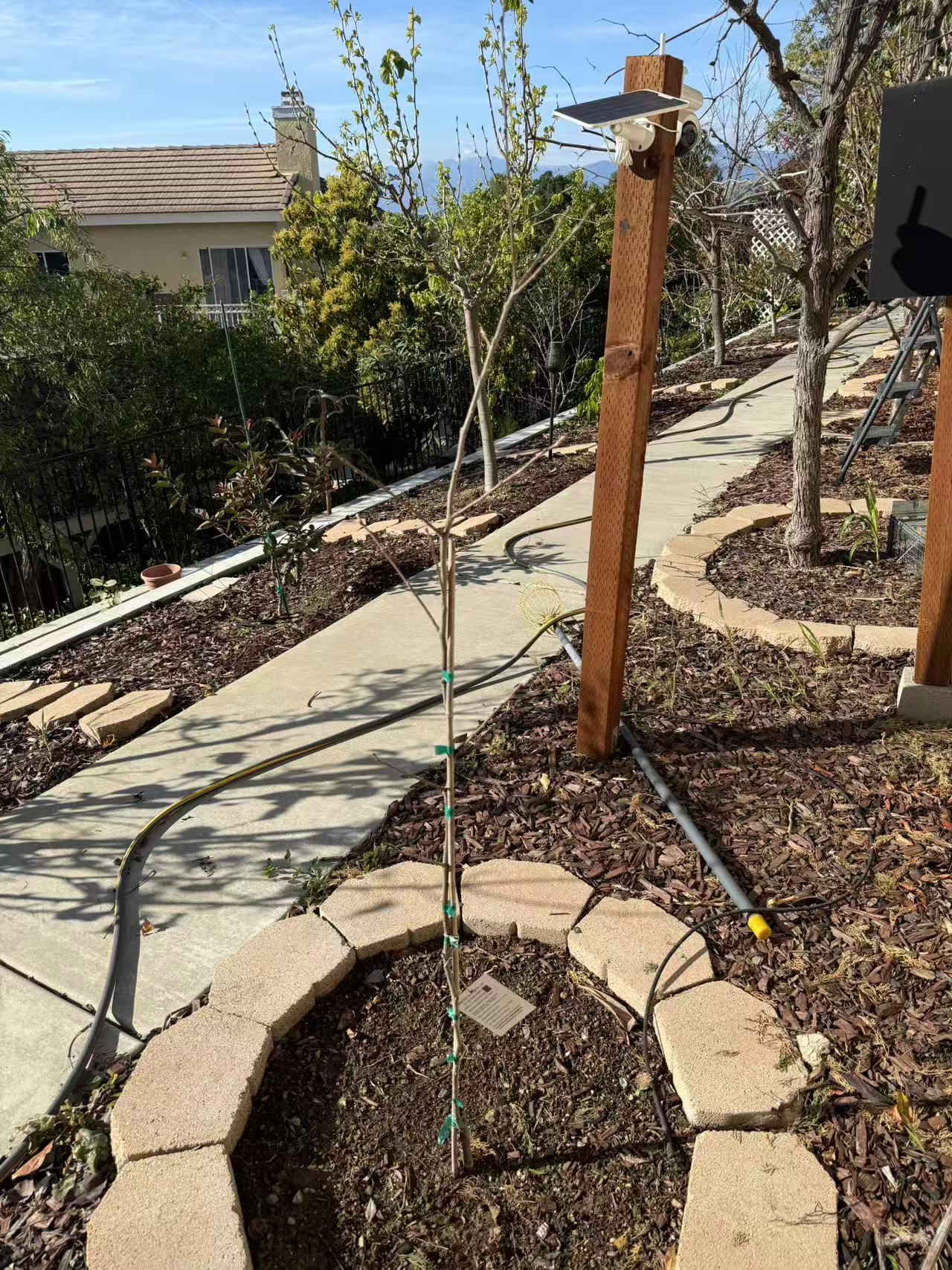
    • Appearance: Currently a bare whip in deep dormancy. Once it wakes up, it will produce broad, glossy leaves that turn spectacular shades of red and orange in the fall.
    • The “Chocolate” Magic: If pollinated, the flesh darkens into its signature chocolatey color. It becomes so sweet and pudding-like that it’s often eaten with a spoon.

    📅 Precise Ripening Months

    Persimmons are the crown jewels of the autumn garden in Southern California:

    • Expected Harvest: Late October to November.
    • Ripeness Cues: Wait until the skin takes on a deep reddish-orange hue and the fruit feels extremely soft (like a water balloon). That is when the “chocolate pudding” texture is at its peak.

    📝 My Gardening Notes

    • The Texture Balance: Planted fresh in January 2026 to complete the persimmon portfolio. Having both the crunchy Fuyu and the soft, rich Chocolate variety covers all the bases for autumn harvests.
    • Winter Slumber: As a new seedling, it is currently fast asleep. The lack of buds right now is a good thing—it means the tree is focusing its energy on root development underground rather than pushing delicate leaves into the cool winter air.

    🛠️ Care & Maintenance

    • Hold the Fertilizer: Do not apply any fertilizer until the tree has fully broken dormancy and pushed out its first set of mature leaves. Fertilizing a sleeping bare-root tree can burn the new roots.
    • Careful Watering: Because it has no leaves to transpire water, its moisture needs are extremely low right now. Keep the soil barely moist to prevent root rot in the heavy local soil.
    • Patience: Persimmons are notoriously late to wake up. Expect to see the first buds swelling around late March or April as the weather consistently warms up.
  • Arkin Star Fruit

    Arkin Star Fruit

    Plant Profile: Arkin Star Fruit

    📋 Basic Info

    • Variety Name: Arkin Star Fruit (Inferred as the most likely market standard)
    • Planted Date: Fall 2024 (Purchased from Mimosa Nursery)
    • Yield Performance: ★☆☆☆☆ (Currently a first-year sapling focused on vegetative growth)
    • Taste Profile: (Expected) The classic sweet star fruit flavor. Mature fruits are golden yellow, crisp, juicy, purely sweet with no tartness, and have a floral aroma.

    📖 Variety Overview Arkin is the most famous and widely planted sweet star fruit variety in the US, making it an excellent choice for Southern California home orchards.

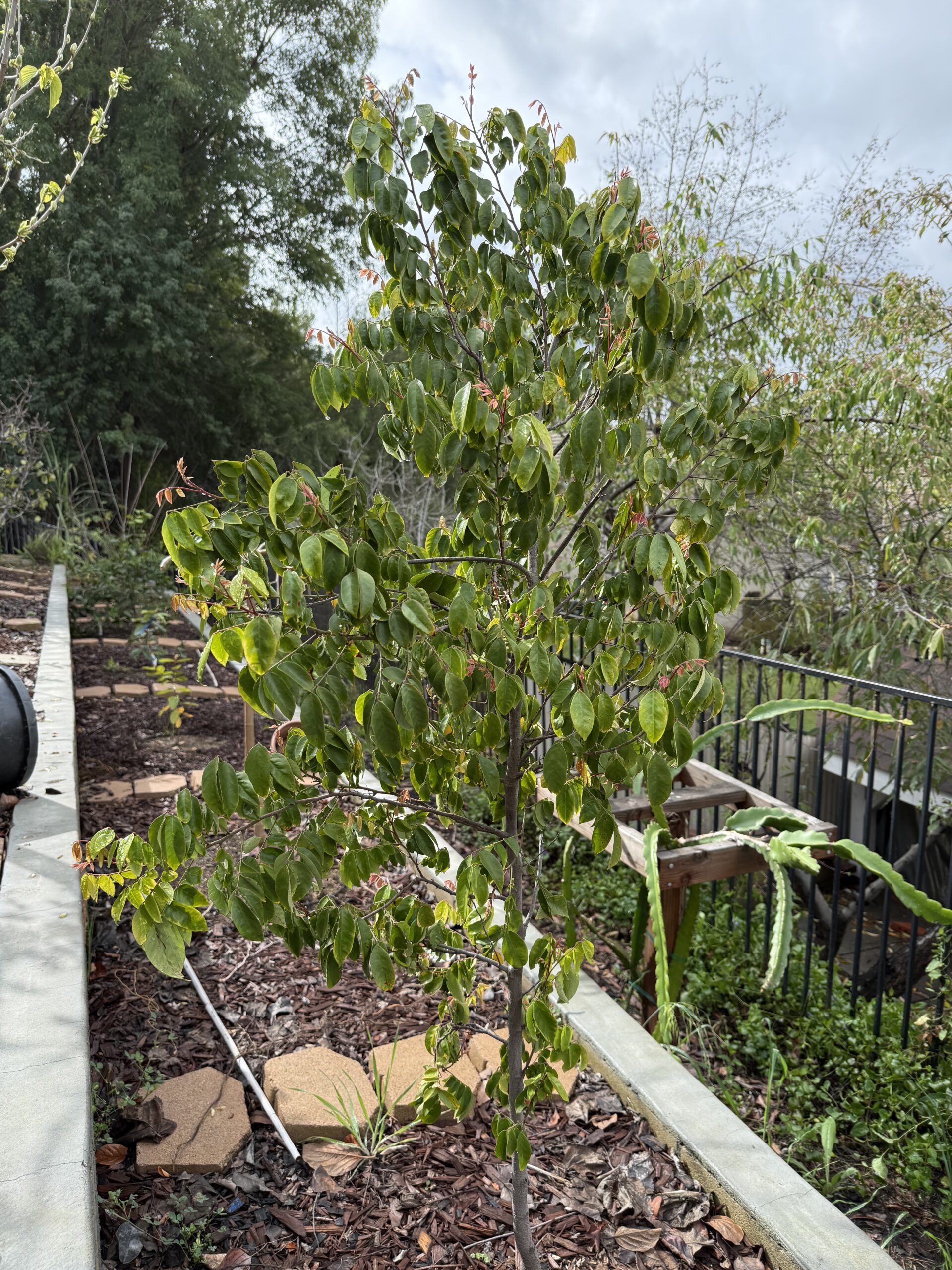
    • Appearance: It has a graceful tree form, and its leaves exhibit sleep movements (folding up at night or when touched). The reddish-brown new growth seen in the photo is a sign of vigor.
    • Growth Habits: It loves warm, sunny environments. The biggest challenge in Rowland Heights is winter protection. Once it survives the winters, it grows rapidly and is known for being highly productive when mature, often fruiting multiple times a year.

    📅 My Planting Log

    • A Vibrant New Member: Joined the orchard in the fall of 2024. As of February 2026, the photo shows a very healthy sapling with an upright form and lush foliage, showing no signs of pests or diseases.
    • Positive Growth Signals: Despite being winter, the numerous reddish-brown new shoots on its branches indicate that its root system has adapted well to the soil and it is actively engaging in vegetative growth. This is a very promising start.

    🛠️ My Care Guide (For Sapling Stage)

    • Critical Task: Frost Protection: Star fruit is a tropical plant and is highly sensitive to frost. For the first 2-3 years before it matures, winter protection is paramount. If temperatures are forecast to approach 32°F (0°C), I will cover it with frost cloth or apply a thick layer of mulch at the base for insulation.
    • Water Management: Star fruit prefers moist but well-draining soil and is very susceptible to root rot from waterlogging. As a sapling with a shallow root system, I will keep the soil consistently slightly moist, especially during dry or windy weather, to prevent it from drying out and wilting.
    • Wind Protection: Its branches are relatively brittle, and its leaves easily dry out in strong winds. While its trunk is still developing strength, I will be mindful of strong Santa Ana winds and provide support if necessary.
  • Finger Lime

    Finger Lime

    🍋 Plant Profile: Australian Finger Lime

    📊 Basic Information

    • Variety Name: Australian Finger Lime
    • Planting Time: Summer 2024
    • Yield Performance: ★★★★★ (Extremely vigorous growth; reached an astonishingly high yield in just one year by 2025)
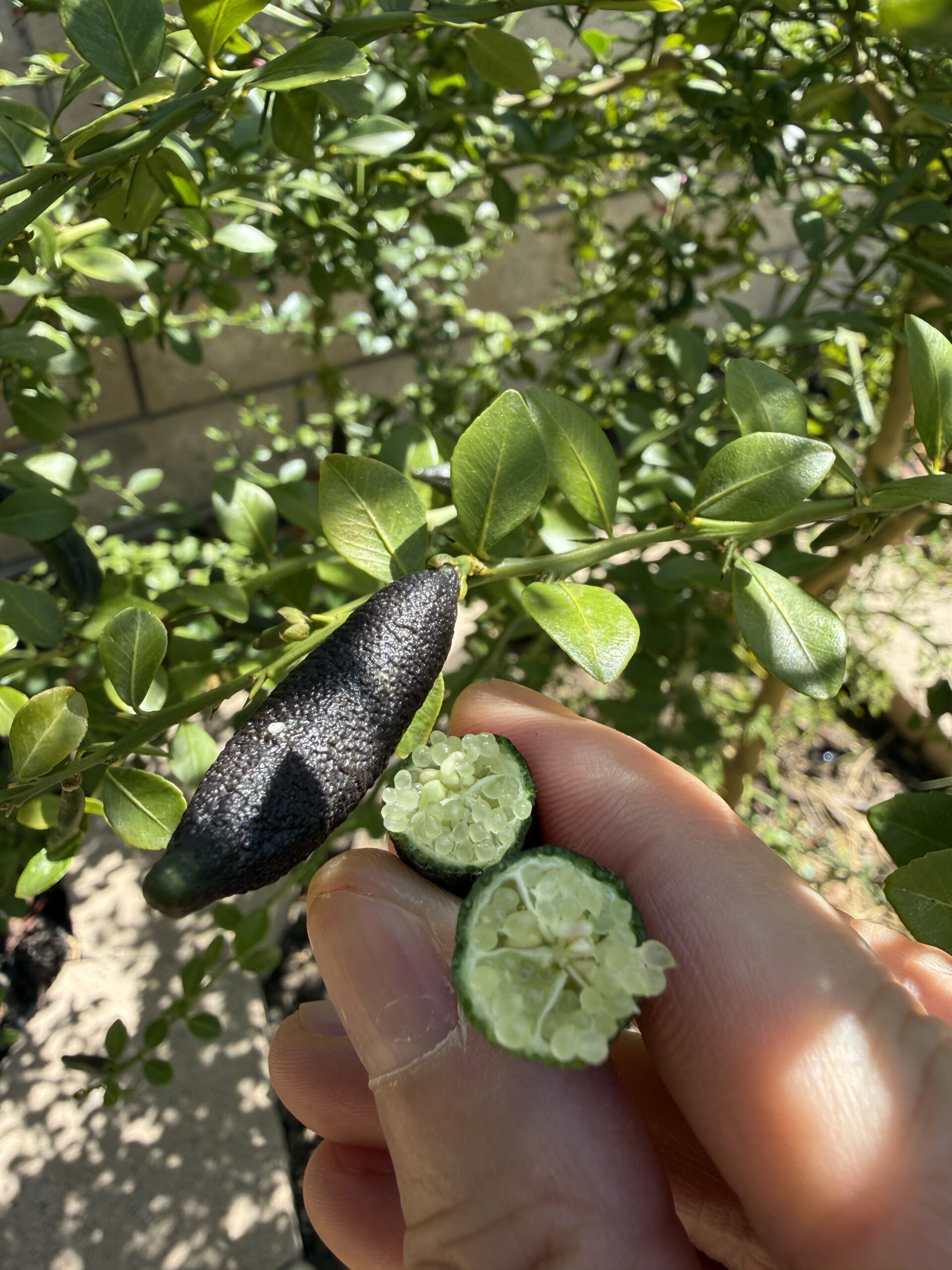
    • Taste Characteristics: The flesh consists of crystal-clear, pearl-like vesicles that burst on the tongue like caviar; the acidity is mild and palatable, not as sharp as regular lemons, with an incredibly fresh, exclusive citrus aroma.

    📖 Variety Introduction Known as the “caviar of citrus,” the finger lime originally grew in the subtropical rainforests of Australia. Now, it is absolutely one of the most prized and rare varieties I am proud to grow in my orchard.

    • Appearance: It has an elongated shape, much like a human thumb. The color transformation of the rind is magical. When it first grows and is unripe, it’s green. As it basks in the abundant sunlight and ripens, it gradually darkens, eventually turning into that highly premium dark green or purplish-black seen in the photo. Once cut open, it’s filled with fragrant “little pearls.”
    • Flavor Profile: This is what surprised me the most! It completely overturned my stereotype of lemons being “tooth-achingly sour.” Its tartness is very mild and smooth, making it incredibly delicious even when eaten straight. The sensation of countless juice-filled droplets bursting in the mouth provides a top-tier experience that ordinary citrus simply cannot offer.
    • Growth Habit: Although native to the rainforest, it has adapted perfectly to the warm, sunny climate of Rowland Heights. Its branches are covered in sharp little thorns, which act as its natural barrier for self-protection in the wild.

    📝 My Planting Record

    • An Unexpected High-Yield Champion: I only planted this tree in the summer of 2024. I originally thought this rare fruit would be delicate and slow-growing, but I never expected it to adapt so perfectly to the environment here. By 2025, it directly entered an explosive production phase, with the branches densely packed with dark “little torpedoes.” The yield has far exceeded my expectations.
    • A Premium Culinary Garnish: Because of its mild acidity and stunning popping texture, it has now become a regular on my dining table. Whether squeezed over fresh seafood to enhance the flavor, mixed into salads, or simply used to garnish sparkling water, it is an irreplaceable, divine ingredient.

    🛠️ My Care Essentials

    • Fully Armed Pruning: Because there are many sharp thorns hidden among its branches and leaves, I must wear thick gardening gloves every time I prune it or harvest the fruit. During the winter dormancy period, I prune away crowded, crossing, and weak inner branches to maintain excellent airflow and light penetration within the canopy.
    • Water Management: If I want the “caviar” inside to be plump and juicy, water is absolutely essential. During the hot California summers and its crazy fruiting stage, I keep the deep soil moist while also paying attention to drainage to prevent waterlogging and root rot.
    • Frequent Light Fertilization: Citrus plants are “heavy feeders,” especially with such a massive yield right now. During the vigorous growth periods in spring and summer, I regularly supplement it with specialized organic citrus fertilizer, especially plenty of potassium. This not only promotes fruit expansion but also helps that green rind perfectly transition to a mature dark color.
    • Pest Inspection: Citrus leafminers or aphids occasionally visit citrus plants in Southern California. I frequently inspect its tiny, emerald-green leaves. If I spot any signs of pests, I promptly spray natural Neem Oil to protect it.
  • Fuyu Persimmon

    Fuyu Persimmon

    🍊 Plant Profile: Fuyu Persimmon

    📊 Basic Information

    • Variety Name: Fuyu Persimmon
    • Planting Time: Original old tree in the orchard, reborn after transplanting
    • Yield Performance: ★★★★☆ (Survived a near-death experience and has bounced back completely; currently producing a heavy crop)
    • Taste Characteristics: Crisp and sweet like an apple, completely non-astringent, with delicate flesh and unique notes of cantaloupe and brown sugar.

    📖 Variety Introduction Fuyu is one of the most popular non-astringent persimmon varieties, and it’s definitely a star in my autumn orchard.

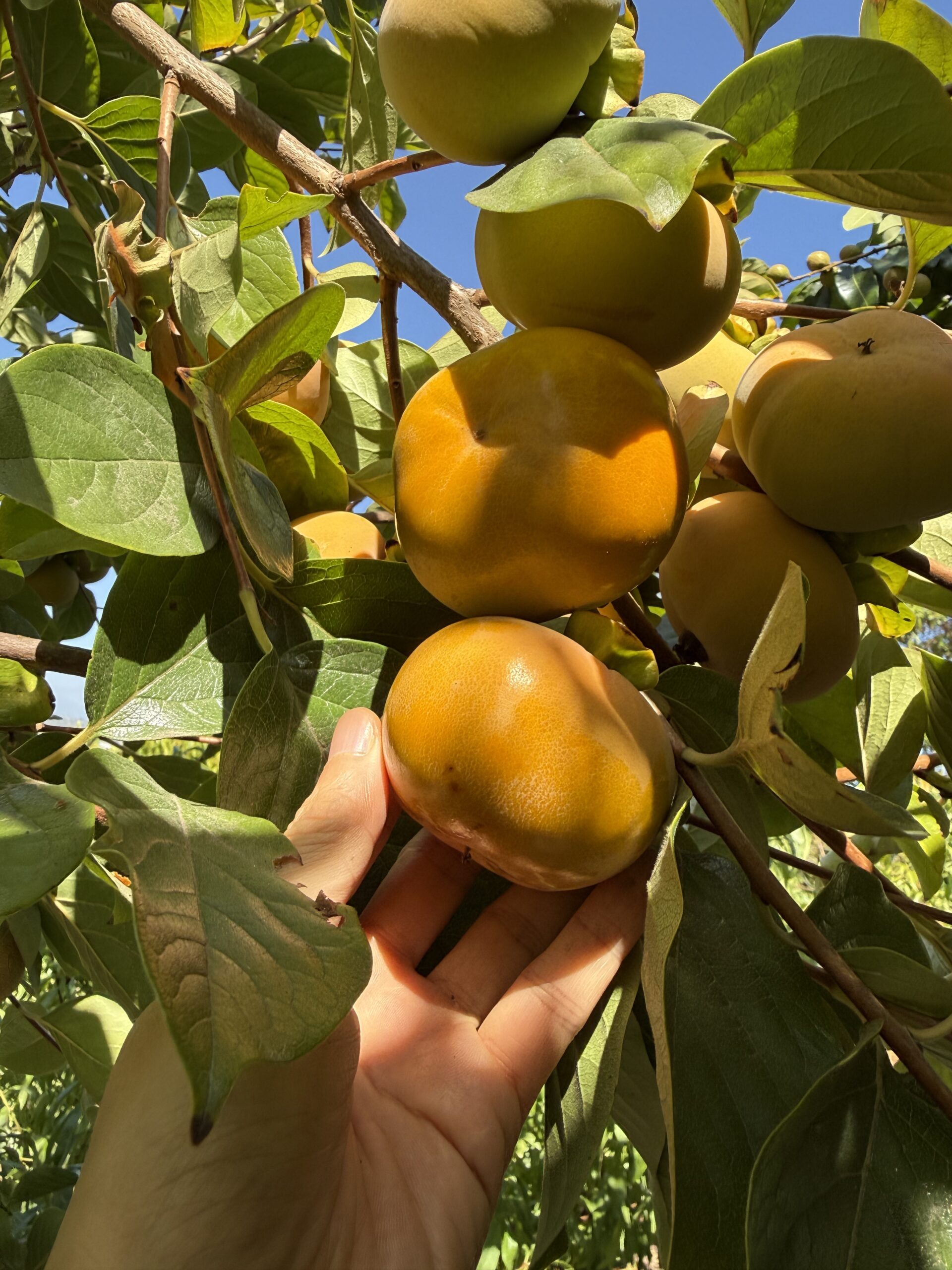
    • Appearance: Its fruit shape is flat and slightly squarish. When ripe, the skin turns a highly tempting bright orange, smooth and glossy. Looking at the plump fruits I grew in the photo, the visual appeal is just stunning.
    • Flavor Profile: Unlike traditional astringent persimmons that must be soft and mushy to eat, the biggest feature of the Fuyu is that I can bite right into it, skin and all, while it’s still hard and crisp. The taste is refreshingly sweet but not cloying. If you don’t like a mushy texture, this is absolutely the top choice.
    • Growth Habit: It loves warm, abundant sunshine and has adapted perfectly to the climate here in Rowland Heights. In late autumn, its leaves will turn beautiful shades of deep red and golden yellow. After the leaves drop, the whole tree looks like it’s covered in little red lanterns, offering incredible ornamental value.

    📝 My Planting Record

    • A Thrilling Rebirth: This tree has a very rocky backstory. It was actually an old resident that was already here when I first moved in. Later, because I was building a retaining wall at home, I had to undertake a massive transplanting operation. That move severely drained its vitality, and it was on the brink of death. It was truly heartbreaking to see it looking so weak.
    • Survival by Amputation: To save it, I made a difficult but ultimately correct decision: I ruthlessly cut off almost all of its branches, making a desperate bet by keeping only two main trunks. It was this extreme, heavy pruning that drastically reduced water evaporation and nutrient consumption, giving the damaged root system a chance to breathe and miraculously saving its life.
    • The Gift of Harvest: After a long period of rest and recovery, not only did it stubbornly survive, but today it gave me a huge surprise—it has started fruiting heavily! Looking at the dense, heavy persimmons hanging on the branches, all the hard work and initial reluctance to prune so hard were totally worth it. The vitality of this tree is truly admirable.

    🛠️ My Care Essentials

    • The Lesson of Severe Pruning: My personal experience taught me that transplanting an old tree carries huge risks, and you have to be willing to “behead” it to balance the damaged root system. Now that it has a new lease on life, my future winter pruning will focus on maintaining airflow and light penetration in the canopy, removing water sprouts and crossing branches to keep it from growing too tall.
    • Watering: Even though its reborn root system is now well-established, during the hot California summers and its current heavy fruiting stage, I need to provide deep and consistent watering, while also being careful to avoid waterlogged soil that could rot the roots. Stable moisture effectively prevents autumn fruit drop.
    • Moderate Fruit Thinning: Although I’m thrilled to see such a massive fruit load this year, to protect the newly recovered tree from collapsing under the weight (and potentially snapping those two precious main branches), and to ensure each persimmon grows larger and sweeter, I might have to harden my heart and thin out some of the smaller or overly crowded fruits.
    • Fall Nutrient Reserves: Once this batch of fruit is fully harvested and before it drops its leaves for dormancy, I will treat it to a hearty feast of organic fertilizer and mulch to reward its hard work this year and help it store up plenty of energy for next spring.