Tag: tm-08

  • Asian Pear

    Asian Pear

    🍐 Plant Profile: Asian Pear

    📊 Basic Info

    • Variety: Asian Pear (Pyrus pyrifolia)
    • Planting Date: Pre-2022 (Original tree; relocated in 2022 due to retaining wall construction)
    • Yield Performance: ★☆☆☆☆ (Recovering from root damage; no fruit since relocation, but highly promising for this year)
    • Flavor Profile: Distinctively crisp and incredibly juicy; offers a refreshing, sweet, apple-like crunch.

    📖 Variety Overview

    Asian pears are prized for their firm, grainy texture and high water content, making them a staple in local Southern California orchards.

    • The Relocation Challenge: This tree underwent significant stress in 2022 when its roots were damaged during a landscape overhaul. It has spent the last two years in a “recovery and rebuilding” phase.
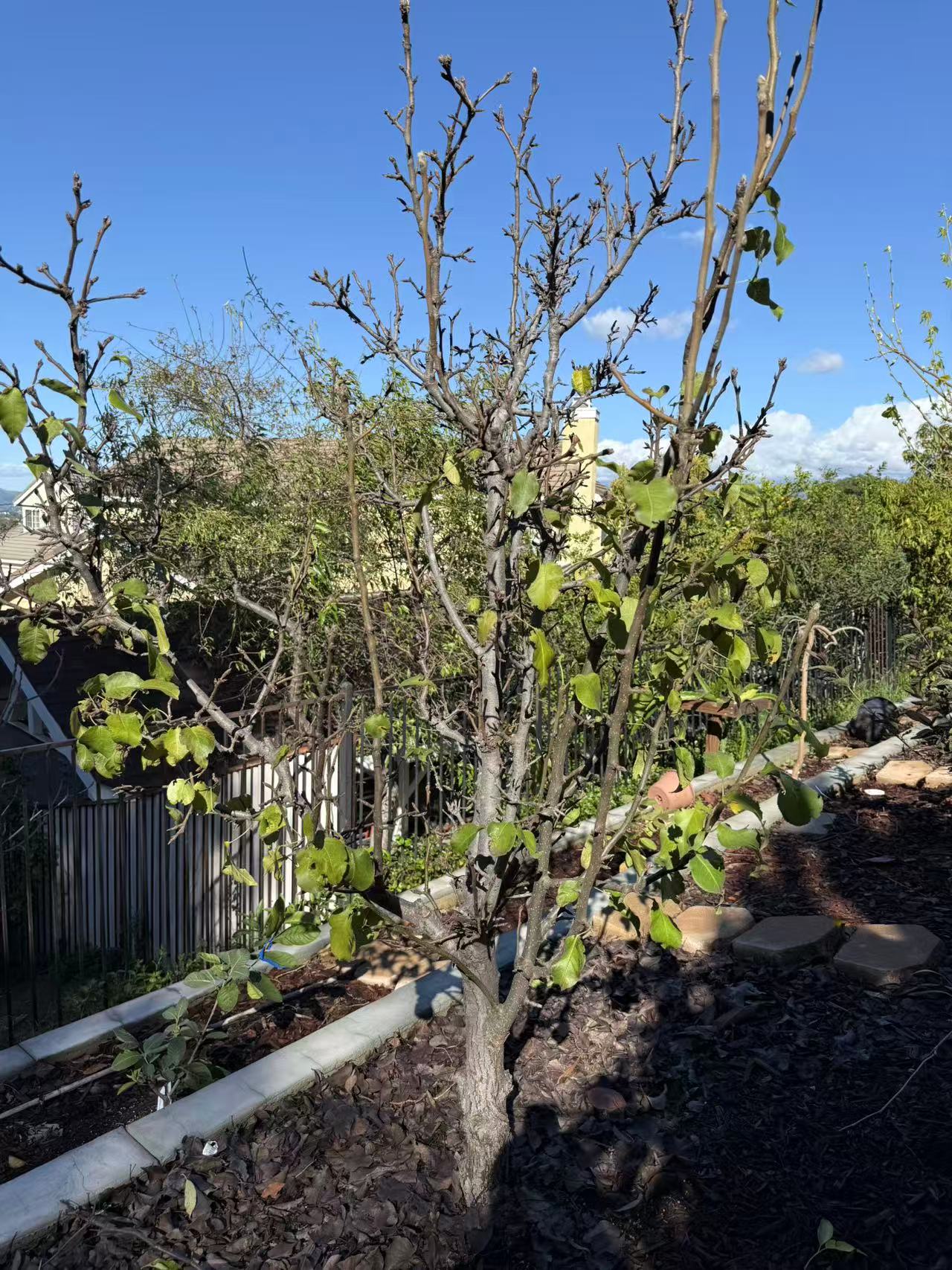
    • Signs of Vigor: The tree’s condition has improved year over year. The current structure looks robust, with buds ready to push, indicating that the root system has successfully re-established itself.
    • Local Adaptation: They thrive in the Rowland Heights sun and generally receive enough “chill hours” during the winter to trigger a healthy bloom.

    📅 Precise Ripening Months

    While specific ripening varies by cultivar (e.g., Hosui, Shinseiki), the general timeline for our region is:

    • Expected Harvest: August to September.
    • Peak Quality Month: Late August (The ideal balance of sugar and firm texture).

    📝 My Gardening Notes

    • A Resilient Veteran: As one of the original trees in the yard, its steady recovery from major transplant shock is a testament to its hardiness.
    • 2026 Comeback: After three years of patience, 2026 looks to be the year this survivor returns to full production.

    🛠️ Care & Maintenance

    • Fruit Thinning: If it blooms heavily this spring, I will thin the fruit to ensure the tree doesn’t overextend itself while still finalizing its recovery.
    • Hydration: Consistent watering is critical during the heat of July and August to support fruit development and prevent drought stress.
    • Pruning Reflection: Now is the time to remove any minor rubbing branches to maintain an open canopy for better air circulation and sunlight.
  • Winter Jujube

    Winter Jujube

    🌳 Plant Profile: Winter Jujube (Dongzao)

    📊 Basic Info

    • Variety: Winter Jujube (Dongzao)
    • Planting Date: Late 2022
    • Source: Purchased from Omori Nursery (Big Forest Nursery) for $1,500 as a mature tree
    • Yield Performance: ★★★★★ (Being a mature tree upon planting, it has deep roots and offers high, stable yields)
    • Flavor Profile: Extremely sweet and crispy with zero acidity; the flesh is fine-textured and premium in quality

    📖 Variety Overview

    The Dongzao, or “Winter Jujube,” is hailed as the king of jujubes in Northern China.

    • Appearance: The fruit is typically smaller than the “Shanxi Li” variety, featuring a round or slightly oblong shape
    • Flavor Excellence: It is famous for its “crisp-sweet” profile. Unlike the larger Li jujube, which can be airy, the Winter Jujube has a dense, snapping crunch and intense sugar concentration
    • Acclimatization: In the sunny climate of Rowland Heights, this variety thrives, accumulating sugars rapidly due to the significant temperature swings between day and night

    📅 Precise Ripening Months

    While its name implies “Winter,” the abundant Southern California sun accelerates its growth cycle:

    • Primary Harvest Season: Late July to August
    • Maturity Gap: In your garden, it ripens about one month earlier than the Shanxi Li variety
    • Peak Quality: The fruit is best picked when the skin turns from creamy green to a brownish-red blush

    📝 My Gardening Notes

    • The Major Investment: This tree was a significant addition to the orchard in late 2022. Because it was planted as a mature tree, it avoided a long establishment phase and began producing high-quality fruit almost immediately
    • Variety Comparison: Though the fruits are a size smaller than the Li jujube, the superior sweetness and lack of any sour aftertaste make this the family favorite

    🛠️ Care & Maintenance

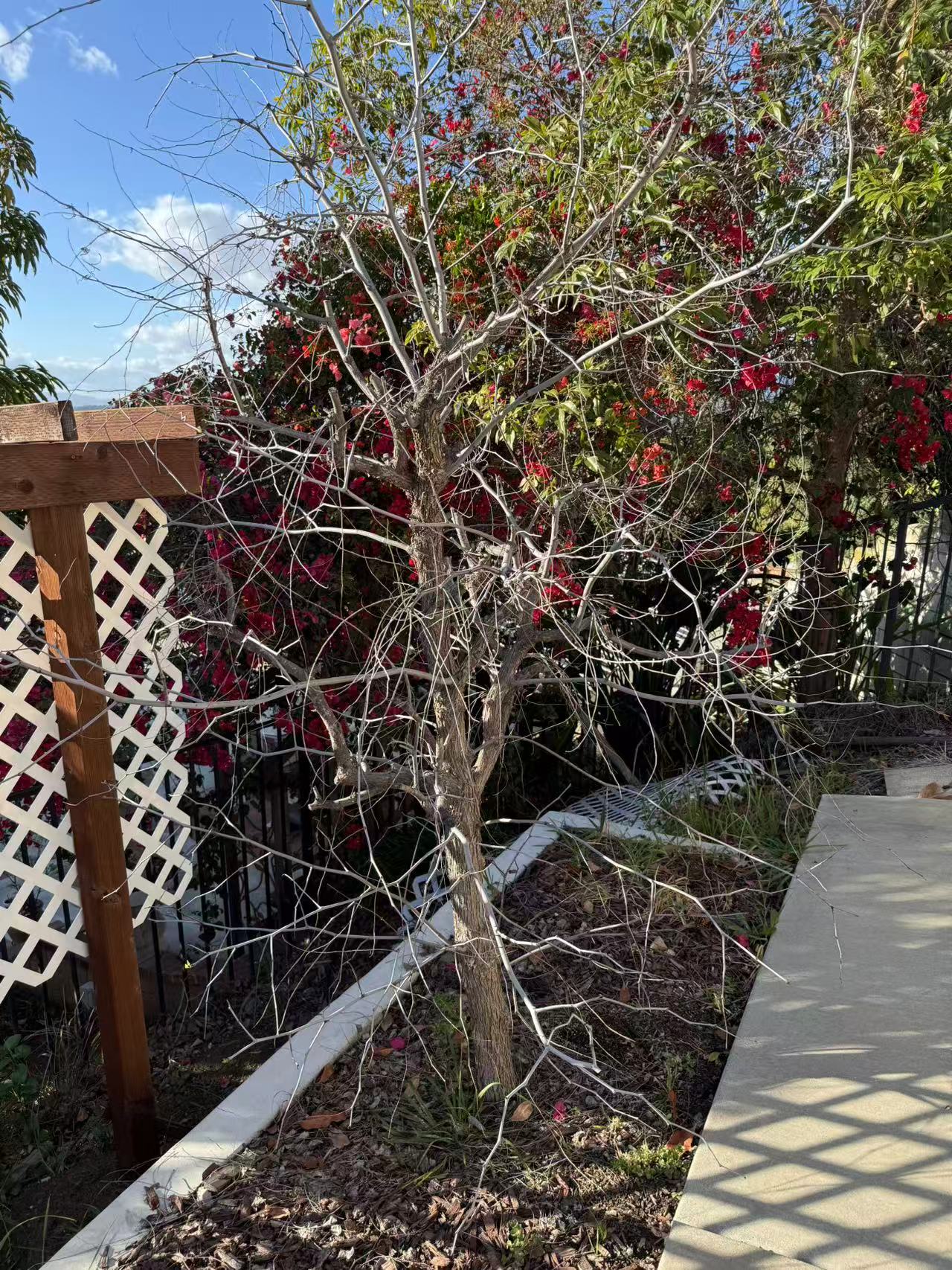
    • Winter Pruning: As seen in its current dormant state, jujubes require structural pruning to remove “water sprouts” and thinning of inner branches to ensure sunlight reaches the center of the canopy
    • Water Consistency: To prevent the thin, crispy skin from cracking, it is vital to maintain steady irrigation in July as the fruit sizes up
    • Sucker Management: Keep an eye out for root suckers (small shoots emerging from the base) and remove them promptly so they don’t drain energy from the main tree
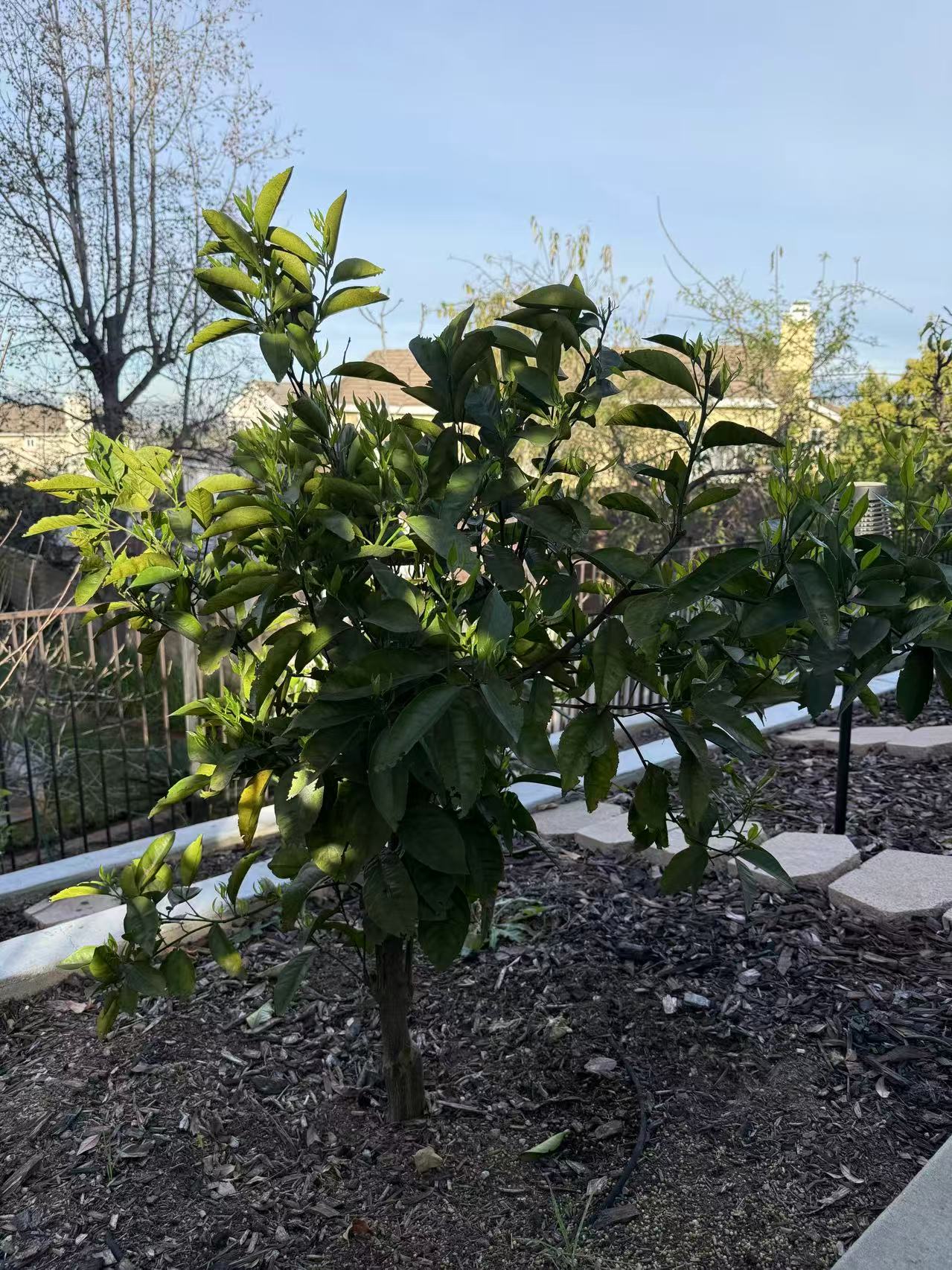
  • Valencia Orange

    Valencia Orange

    🍊 Plant Profile: Valencia Orange

    📊 Basic Information

    • Variety Name: Valencia Orange
    • Planting Time: Early 2022 (The second pioneer tree in my orchard)
    • Yield Performance: ★☆☆☆☆ (Currently recovering from early root damage, similar to its neighbor, the Washington Navel)
    • Taste Characteristics: Known as the “King of Juice”; extremely juicy with a rich flavor and a perfect sweet-tart balance.

    📖 Variety Introduction While the Washington Navel is the king of fresh eating, the Valencia is the undisputed champion for juicing.

    • Appearance: The fruit is round with a thin, smooth rind. It has a unique “re-greening” trait where ripe fruit can turn slightly green again in warm weather without losing quality.
    • Flavor Profile: It boasts a very high juice content and few seeds, making it the top choice worldwide for orange juice.
    • Growth Habit: It loves the sun and warmth of Rowland Heights. As a late-season variety, its fruit typically matures in the summer, perfectly following the spring-harvested Navels.

    📝 My Planting Record

    • Companion in Adversity: This was the second tree I ever planted. Because I planted it right next to the Washington Navel while I was still a novice, it suffered the same root damage from my lack of experience.
    • Synchronized Recovery: After three years of struggling, I finally saw signs of life returning in early 2025. Even though it’s currently battling aphids and leafminers, seeing those new spring buds is a huge relief.
    • The Tuition of a Novice: These two trees represent my growth from a complete beginner to a confident orchardist. Their early injuries were the “tuition” I paid for my education, and their recovery is my reward.

    🛠️ My Care Essentials

    • Dual Pest Defense: Since these trees are planted together, pests can easily spread between them. I use a synchronized treatment of organic Neem Oil on the new growth to keep aphids and leafminers at bay.
    • Root Rehabilitation: I am continuing a gentle root-boosting regimen to ensure these veterans can finally establish a deep, stable root system this year.
    • Summer Irrigation: Because Valencia oranges mature during the hot Rowland Heights summers, I pay close attention to consistent watering to prevent fruit drop during heatwaves.
    • Minimal Pruning: My current priority is building the tree’s strength. I only prune away leaves that are severely damaged by pests, allowing the healthy green foliage to maximize energy production through photosynthesis.
  • Kyoho Grape

    Kyoho Grape

    🍇 Plant Profile: Kyoho Grape

    📊 Basic Information

    • Variety Name: Kyoho Grape
    • Planting Time: Spring 2023
    • Yield Performance: ★★☆☆☆ (Currently in the vine-growing and energy-storing phase; moderate fruiting in 2025, expecting a massive boom in the future)
    • Taste Characteristics: Huge berries, slip-skin, jelly-like soft and juicy flesh, extremely high sweetness with a rich strawberry or “foxy” flavor profile.

    📖 Variety Introduction Kyoho grapes are a very classic table grape variety in my orchard, winning my heart completely with their unmatched “size” and “sweetness.”

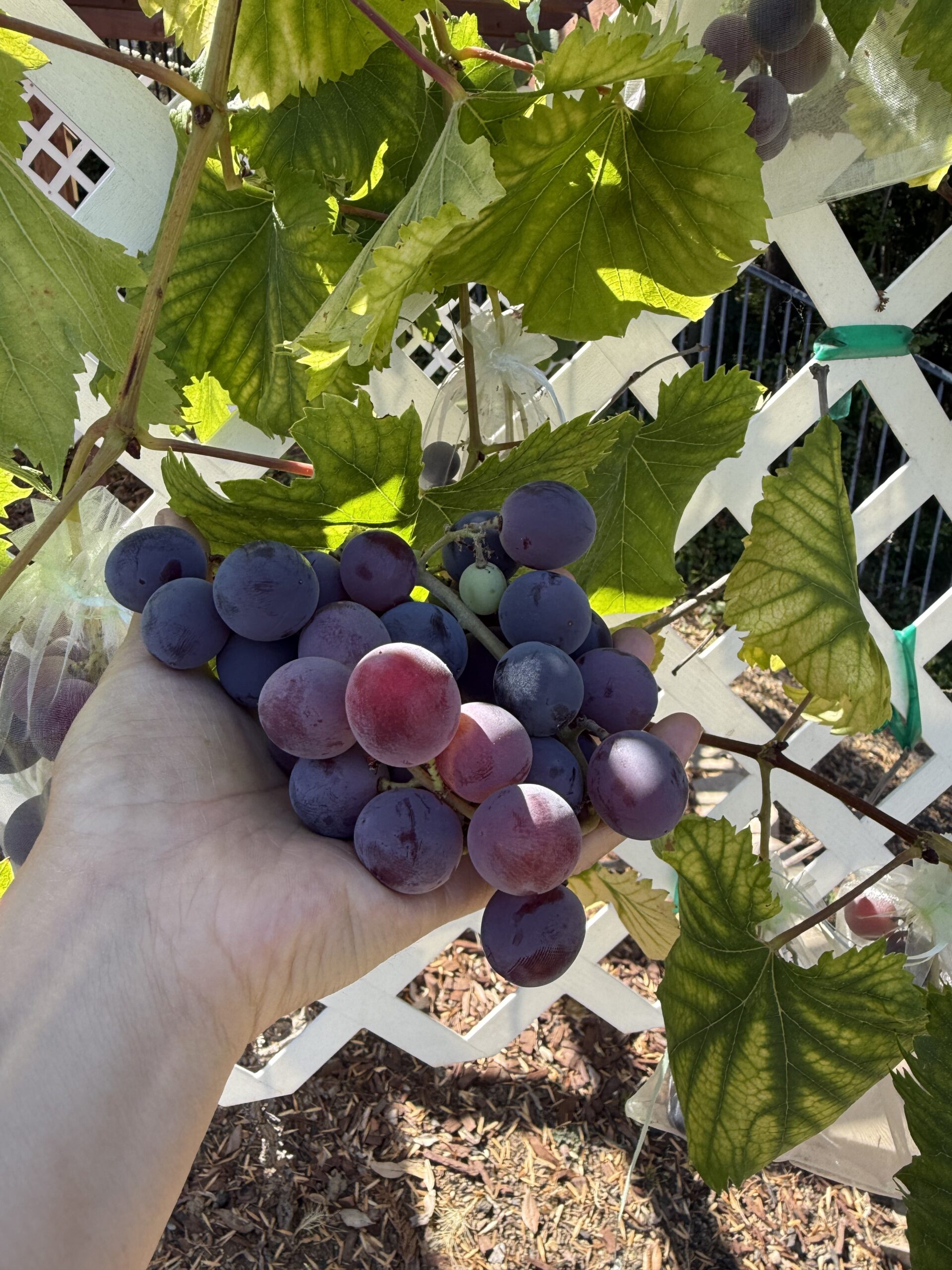
    • Appearance: The berries are exceptionally large, turning purplish-black or purplish-red when fully ripe, with a thicker skin covered in a natural white bloom. The plump, purplish-red clusters I’ve grown perfectly showcase the iconic appearance of the Kyoho.
    • Flavor Profile: The skin and flesh separate very easily. After peeling back the slightly tart skin, the inside reveals translucent, bouncy, jelly-like flesh. It’s incredibly juicy and sweet, offering a very unique and rich fruity aroma when eaten.
    • Growth Habit: It’s a highly vigorous climbing vine. It stretches out beautifully in the warm, abundant sunshine of Rowland Heights, but I need to ensure it has a sturdy trellis system to support the increasingly massive vines and heavy fruit clusters in the future.

    📝 My Planting Record

    • Energy-Storing Phase: I planted this Kyoho in the spring of 2023, and by 2025, it successfully started bearing fruit. The current yield isn’t massive just yet, but that’s mainly because the vines are still developing and climbing; they haven’t fully covered my white lattice trellis. Establishing a strong main trunk and root system takes time, and this is a necessary part of its growth journey.
    • Promising Future: Grapes are long-lived vines, and the first three years are generally considered the “nurturing” period. As the vines continue to extend and grow much thicker over the next few years, I firmly believe the yield will experience a qualitative leap.
    • Meticulous Management: The California sun gives the fruit a stunning color. To protect these hard-won grapes, I specifically wrap them in protective mesh bags to keep birds and insects away. I can clearly see how this careful attention directly translates into a beautiful harvest.

    🛠️ My Care Essentials

    • Training and Tying: Since the vines are still actively in their growth phase, my most important job right now is guiding the new branches to distribute evenly across the white trellis. I use soft ties to secure the vines, ensuring they have enough space to climb, preventing the leaves from getting too crowded, and maintaining excellent airflow and sunlight penetration.
    • Heavy Winter Pruning: I know very well that grape yield and quality heavily depend on winter pruning. Every winter during dormancy (after leaf drop), I have to be ruthless and cut back the vast majority of the current year’s growth, leaving only strong fruiting canes and a few buds. This not only controls the overall shape of the vine but also concentrates the nutrients, allowing for much larger and sweeter grape clusters the following year.
    • Fruit Thinning: To guarantee the huge size and premium quality of the individual berries, I must manually thin the clusters after they bloom and during the early fruit development stage, snipping away a portion of the grapes. Even though it’s hard to part with them sometimes, if I don’t aggressively thin the fruit, it will actually lead to smaller berries, uneven coloring, and a drop in overall sweetness.
    • Water and Fertilizer: I make sure to provide plenty of water during the spring bud break and the summer fruit expansion phases. In the spring, I apply nitrogen fertilizer to encourage the vines to climb quickly. Then, after blooming and during the fruiting stage, I shift my focus to supplementing phosphorus and potassium, which significantly boosts the grapes’ sweetness and helps them develop that perfect deep color.