

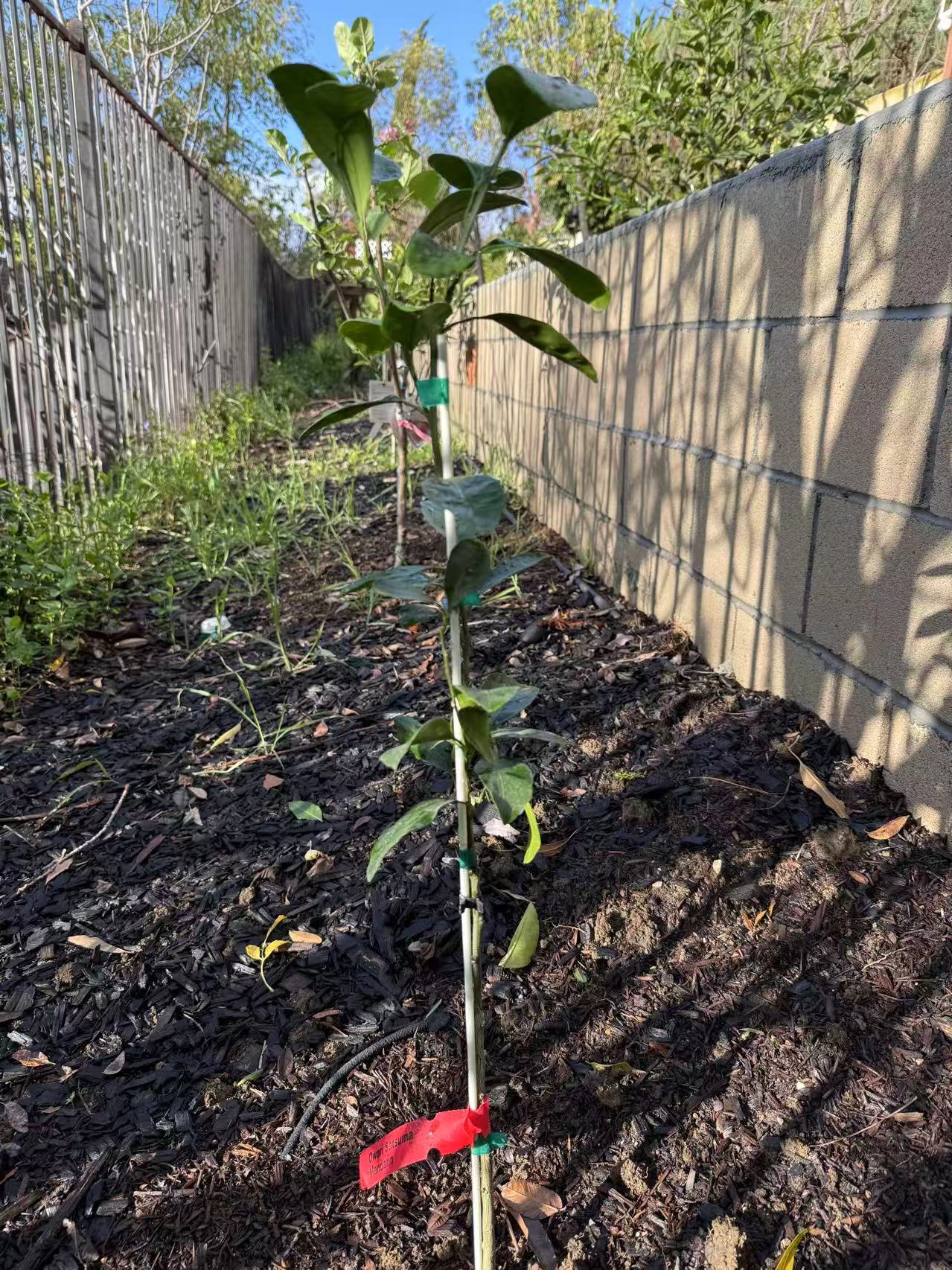
🍊 Plant Profile: Owari Satsuma Mandarin
📊 Basic Info
- Variety: Owari Satsuma Mandarin (Semi-Dwarf)
- Planting Date: January 2026
- Source: Four Winds Growers
- Yield Performance: ★☆☆☆☆ (Currently settling in; known to be extremely prolific once mature, often requiring fruit thinning to prevent branch breakage)
- Flavor Profile: 100% seedless. Famous for its “zipper-skin” which peels off effortlessly. The melting flesh offers a classic, rich mandarin flavor with an exquisite sweet-tart balance.
📖 Variety Overview
Originating from Japan, the Satsuma is a cornerstone of backyard citrus, and Owari is the undisputed king of the late-season Satsumas.
- Cold Hardy Champion: Satsumas are among the most cold-tolerant of all sweet citrus. This tree will easily shrug off any occasional winter chill in Rowland Heights.
- Smart Placement: Planted in the narrow planter strip next to the fence, choosing a Semi-Dwarf rootstock was a brilliant move. It will naturally form a compact, umbrella-like canopy without aggressively outgrowing its designated space.
📅 Precise Ripening Months
The Owari is the quintessential holiday fruit:
- Expected Harvest: November to January.
- Peak Quality Month: December.
- Harvesting Pro-Tip: Satsumas are unique in that they often reach internal maturity (peak sweetness) while the rind still shows patches of green. Do not over-leave them on the tree until they are entirely puffy and orange, or they may become dry inside.
📝 My Gardening Notes
- Premium Pair: Acquired in January 2026 alongside the Kishu from the top-tier Four Winds Growers.
- Smooth Transition: The tree is showing zero signs of transplant shock. Planting in January was ideal, allowing the roots to comfortably explore the surrounding soil without the stress of intense summer heat driving water demand from the canopy.
🛠️ Care & Maintenance (Young Tree Focus)
- Let It Weep: Satsumas naturally develop a spreading, weeping, and somewhat “shrubby” habit. Avoid pruning in the first few years. Let it grow dense; this foliage will naturally shade and protect its own trunk from the harsh Southern California summer sun.
- Sunburn Protection: If the trunk is still highly exposed by July, I will apply a 50/50 mix of white interior latex paint and water to the trunk to prevent sunburn and bark splitting.
- Watering Discipline: The mulch in the photo looks great. I will continue to check the soil moisture beneath the mulch, watering deeply only when the top few inches are dry to prevent root rot in this critical establishment phase.