

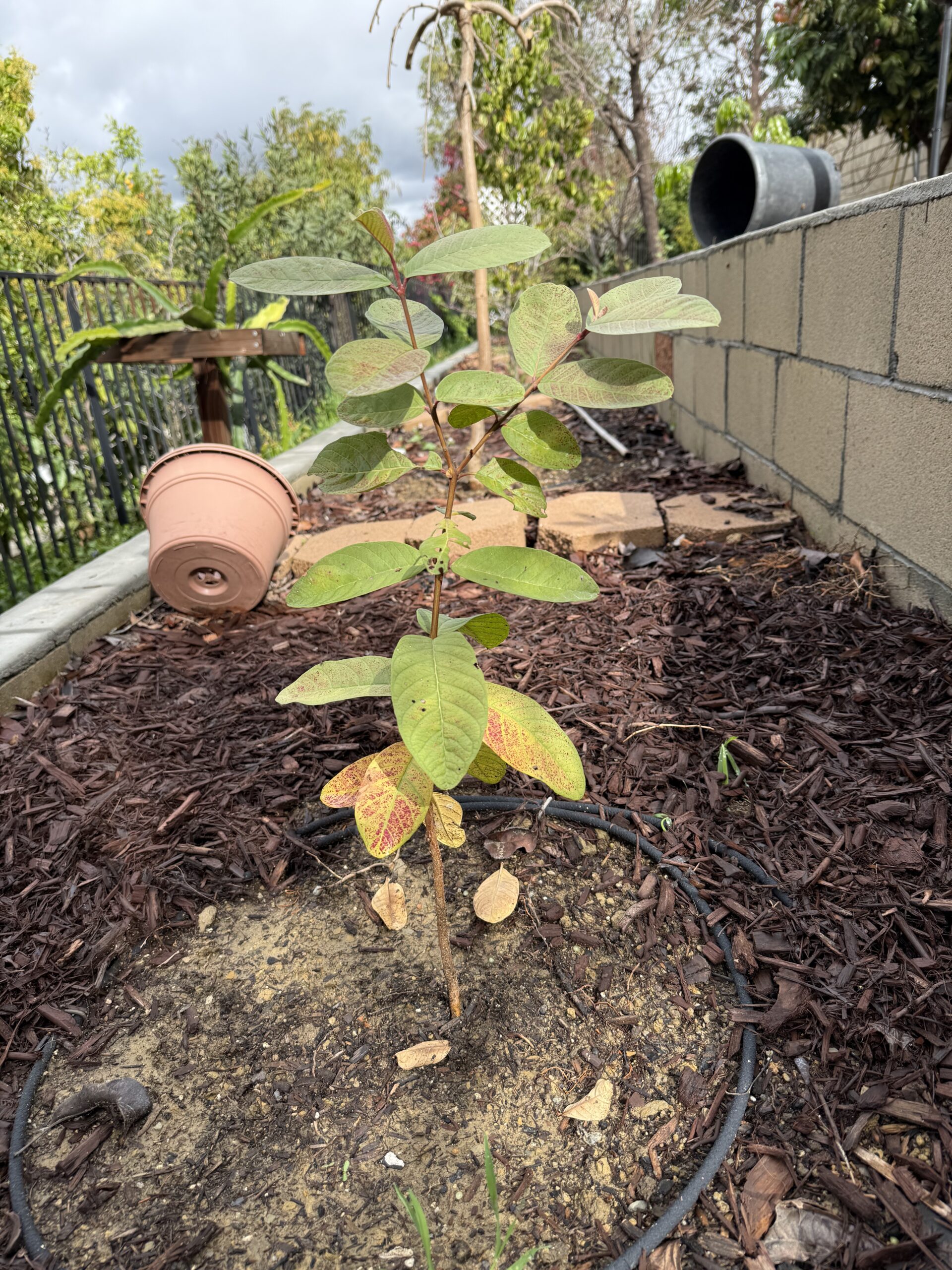
🍓 Plant Profile: Strawberry Guava
📋 Basic Info
- Variety Name: Strawberry Guava
- Planted Date: August 2025 (Purchased from Mosac’s Market Store)
- Yield Performance: ★☆☆☆☆ (Still a sapling under a year old, currently focusing on establishing roots)
- Taste Profile: (Expected) The fruits are petite and exquisite, turning a beautiful purplish-red when ripe. The flavor is a delightful sweet-tart mix, perfectly blending the aroma of strawberries with the base notes of guava. You can eat them whole, skin and seeds included!
📖 Variety Overview If you want to plant a fruit tree in California that will never let you down, the Strawberry Guava is top of the list. It functions as both a highly productive fruit tree and a highly ornamental evergreen shrub.
- Appearance: It features rounded, thick, and glossy leaves. As it matures, the trunk peels to reveal a very smooth, beautiful camouflage-like texture, making it a great landscape plant.
- Growth Habits: It is significantly more cold-tolerant than regular giant tropical guavas! It is perfectly adapted to the climate in Rowland Heights, boasts incredible vitality, and is practically pest-free. Once established, it is extremely low-maintenance.
📅 My Planting Log
- The New Kid on the Block: I brought it home from the market and planted it in late summer, August 2025. As of now, it’s been in the orchard for less than a year.
- Baptism by Winter: Right now, it is at the tail end of its first winter. The yellowing and reddish older leaves at the bottom of the photo are a completely normal metabolic response to the colder weather. It smartly drops its older leaves to concentrate precious nutrients and water on the healthy, green growth at the top. It has successfully survived its first winter after transplanting!
🛠️ My Care Guide (For the First Year)
- Waiting for Spring (Spring Recovery): The priority right now is simply to let it be. The red and yellow leaves at the bottom will drop naturally, and as spring temperatures rise, it will soon trigger a strong flush of new growth.
- Consistent Watering: The photo shows the drip irrigation line is already set up. Since it’s still a young sapling under a year old with a shallow root system, I will continue to keep the mulch layer around it slightly moist, ensuring it doesn’t dry out during the season transition.
- Gentle Feeding: In a few weeks, once the weather warms up completely and I see obvious new buds pushing out, I will apply a very light dose of mild organic fertilizer to help it grow taller this spring.