

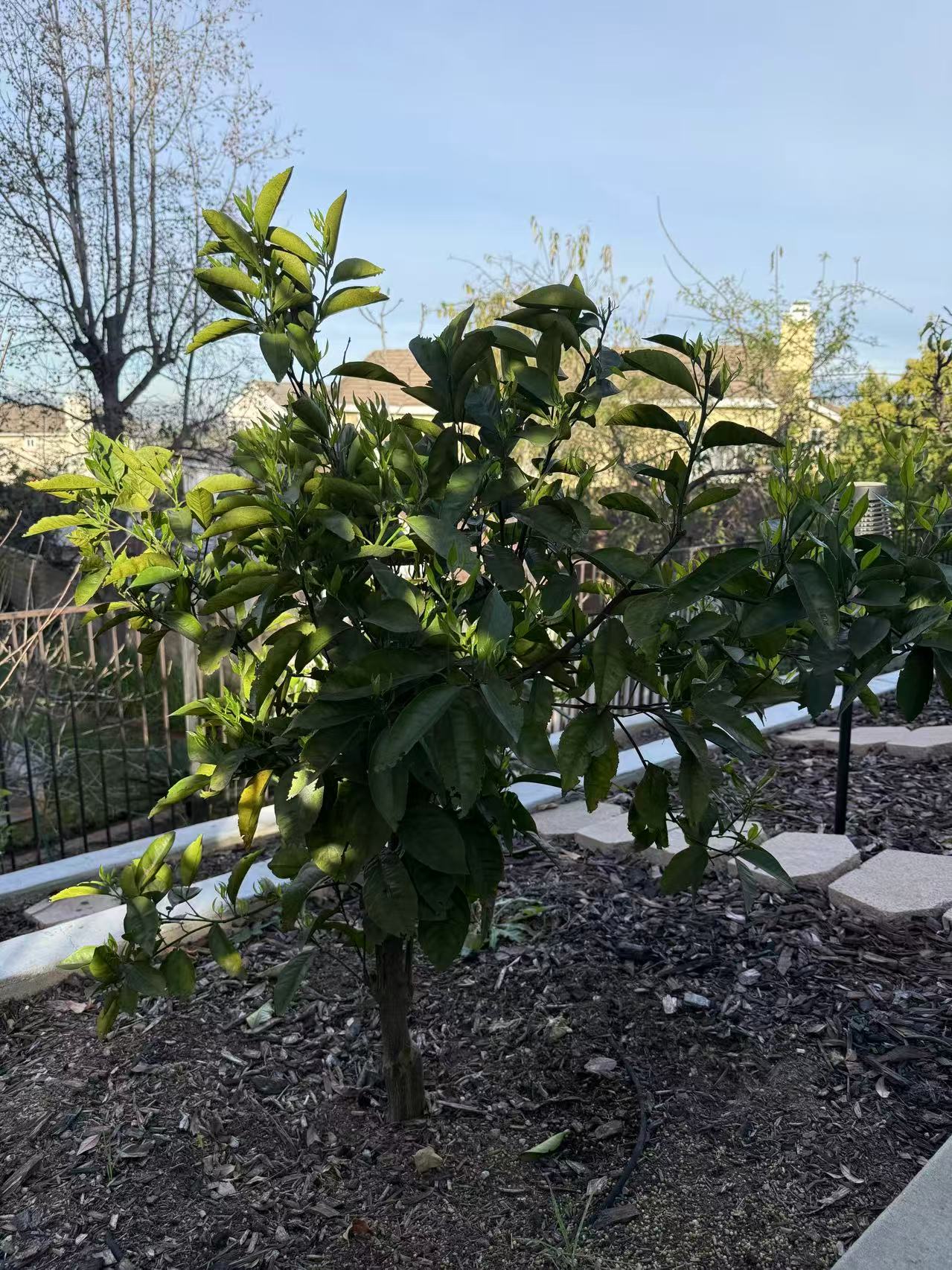
🍊 Plant Profile: Washington Navel Orange
📊 Basic Information
- Variety Name: Washington Navel Orange
- Planting Time: Early 2022 (The very first fruit tree in my orchard)
- Yield Performance: ★☆☆☆☆ (Currently in a recovery and growth phase due to early root damage)
- Taste Characteristics: Classic California navel flavor; seedless, easy to peel, with plump, juicy flesh and a perfect sweet-to-tart balance.
📖 Variety Introduction The Washington Navel is the most iconic citrus variety in California and marks the starting point of my journey as an orchardist.
- Appearance: It features the signature “navel” at the blossom end and develops a brilliant golden-orange rind when ripe. Although the tree isn’t large yet, every new leaf represents its resilient spirit.
- Flavor Profile: Known for its firm texture and rich flavor. Being seedless and easy to peel makes it the ultimate fresh-eating orange for the whole family.
- Growth Habit: It thrives in the abundant Rowland Heights sunshine. While not extremely picky about soil, it is very sensitive to root health and requires a steady, reliable water supply.
📝 My Planting Record
- The Trials of a Pioneer: As my first tree planted in early 2022, it bore the brunt of my inexperience. I accidentally damaged its roots during planting, which caused its growth to stall and remain weak for several years.
- The Long Road to Recovery: After three years of patient care and adjustment, it finally began to turn a corner in early 2025. Seeing it push out vibrant green shoots this spring has been an incredible relief.
- The Battle Against Pests: In its vulnerable recovery state, it faced a massive outbreak of aphids and leafminers right as the new growth appeared. I am now fully committed to a strict pest management routine to ensure these insects don’t derail its comeback.
🛠️ My Care Essentials
- Diligent Pest Control: To combat aphids and leafminers, I regularly inspect the undersides of new leaves. I keep organic Neem Oil or horticultural oil ready to spray in the evenings, providing a shield for the tender new growth.
- Root Rehabilitation: Since the tree suffered “internal injuries” early on, my watering strategy is very precise. I ensure excellent drainage to prevent waterlogging and supplement the roots with seaweed extract to encourage deeper, stronger growth.
- Frequent, Light Feeding: Because it is in a recovery phase, I avoid heavy, aggressive fertilizing. Instead, I follow a “little and often” approach with specialized organic citrus fertilizer and essential micronutrients to support its spring growth spurt.
- Patience and Commitment: Growing fruit trees requires time and heart. With proper pest control, nutrition, and sunlight, I am confident this “orchard veteran” will regain its glory and produce the sweetest oranges in the near future.