

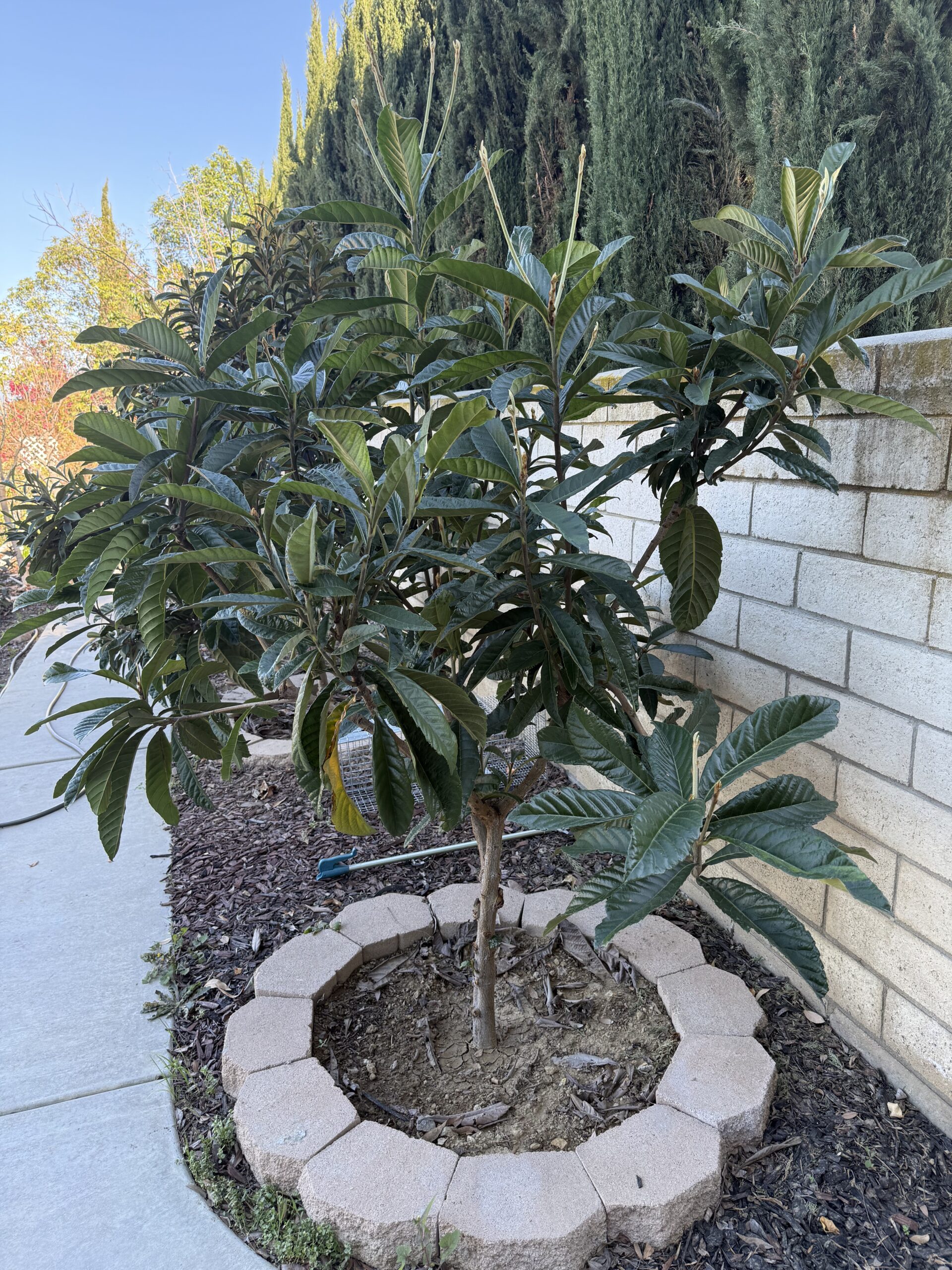
🌿 Plant Profile: Big Jim Loquat
📍 Basic Information
- Variety Name: Big Jim (Eriobotrya japonica)
- Planting Date: Summer 2023
- Yield Performance: ★★★★☆ (Produces large fruits; high yield potential once established)
- Flavor Profile: Refreshingly sweet, meaty texture, easy to peel, well-balanced sugar-to-acid ratio
📖 Variety Introduction
The Big Jim is one of California’s most famous loquat varieties, renowned for its “giant fruits” and excellent commercial potential.
- Fruit Quality: It is one of the largest varieties known, with fruits reaching over 1.5 inches in diameter upon maturity. The skin is a bright golden-yellow, and the flesh is thick with fewer seeds, making for an effortless peeling and eating experience.
- Flavor Profile: Unlike the intense richness of the “Gold Nugget,” Big Jim offers a refreshing, mild sweetness. Its crisp texture and low acidity make it a crowd-pleaser for all ages.
- Growth Habit: This variety is a vigorous grower with an upright, stately form and large, lush leaves, making it an excellent choice for both fruit production and ornamental shade.
📓 My Planting Records
I purchased this tree in Summer 2023 from Da Sen Nursery. Although it has been in the orchard for less than three years, it is already showing some of the strongest growth among all my varieties.
- Current Status: Since its planting in 2023, the tree has shown remarkable vegetative growth, with the canopy expanding rapidly. The trunk and branches are sturdy and healthy.
- Fruiting Expectations: As of early 2026, the tree has not yet begun to fruit. This is largely due to the variety’s strong growth potential, as young trees often prioritize building their structure and root systems. Given its 2023 planting date, I expect a transition toward reproductive growth and a significant harvest within the next 1–2 years as the tree matures.
- Comparative Performance: Compared to other trees of similar age, Big Jim’s foliage is more lustrous and has shown outstanding tolerance to the hot, dry summer climate of Rowland Heights.
🛠️ Maintenance Essentials
- Encouraging Fruit Production: Because Big Jim can have a slightly longer juvenile phase, I plan to adjust my fertilization strategy by reducing nitrogen and increasing phosphorus and potassium to encourage the tree to transition from “growing wood” to “setting buds.”
- Height Control & Pruning: Due to its strong apical dominance (the tendency to grow straight up), I will perform regular tipping or “pinch back” pruning to encourage lateral branching. This not only keeps the fruit within reach but also helps stimulate the formation of fruiting spurs.
- Spring Water Management: While it hasn’t fruited yet, loquats follow a “winter bloom, spring fruit” cycle. During our dry Rowland Heights springs, I ensure consistent root moisture to prepare the tree for its eventual first flowering season.
- Fertilization Strategy: I apply well-composted organic fertilizer in early spring and early fall. For this young, non-fruiting tree, the focus remains on establishing a robust, deep root system to support heavy future yields.