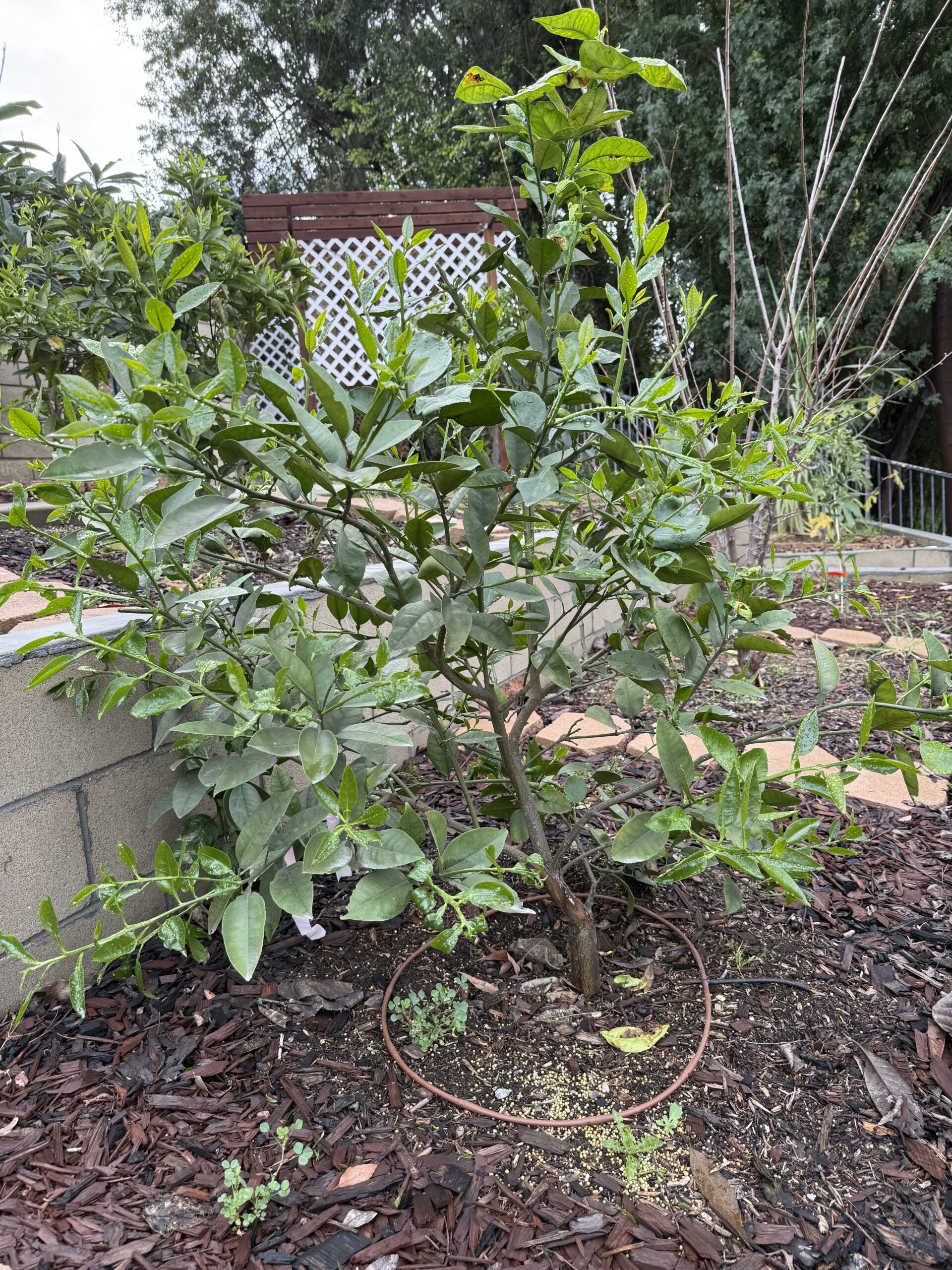
🍊 Plant Profile: Star Ruby Grapefruit
📋 Basic Info
- Variety Name: Star Ruby Grapefruit (Inferred from its red blush, red flesh, and thin skin)
- Planted Date: Early 2024
- Yield Performance: ★☆☆☆☆ (Just catching its breath after severe pest damage last year, currently in recovery mode)
- Taste Profile: The pinnacle of looks and flavor in the grapefruit family. It features incredibly thin skin with a gorgeous red blush and deep, ruby-red flesh. It’s overwhelmingly juicy with a perfect sweet-tart balance, lacking the strong bitter aftertaste of standard white grapefruits.
📖 Variety Overview If you want to grow a grapefruit that is both delicious and beautiful in a backyard, Star Ruby is the ultimate choice for California growers.
- Appearance: It has classic, vibrant green citrus foliage. Its biggest highlight is the fruit: under the intense summer sun of Rowland Heights, the rind develops a beautiful red blush, and slicing it open reveals an incredibly tempting dark red interior.
- Growth Habits: It is a high-heat variety that thrives in the climate of Southern California’s inland valleys. The more heat it gets, the redder and sweeter the flesh becomes.
📅 My Planting Log
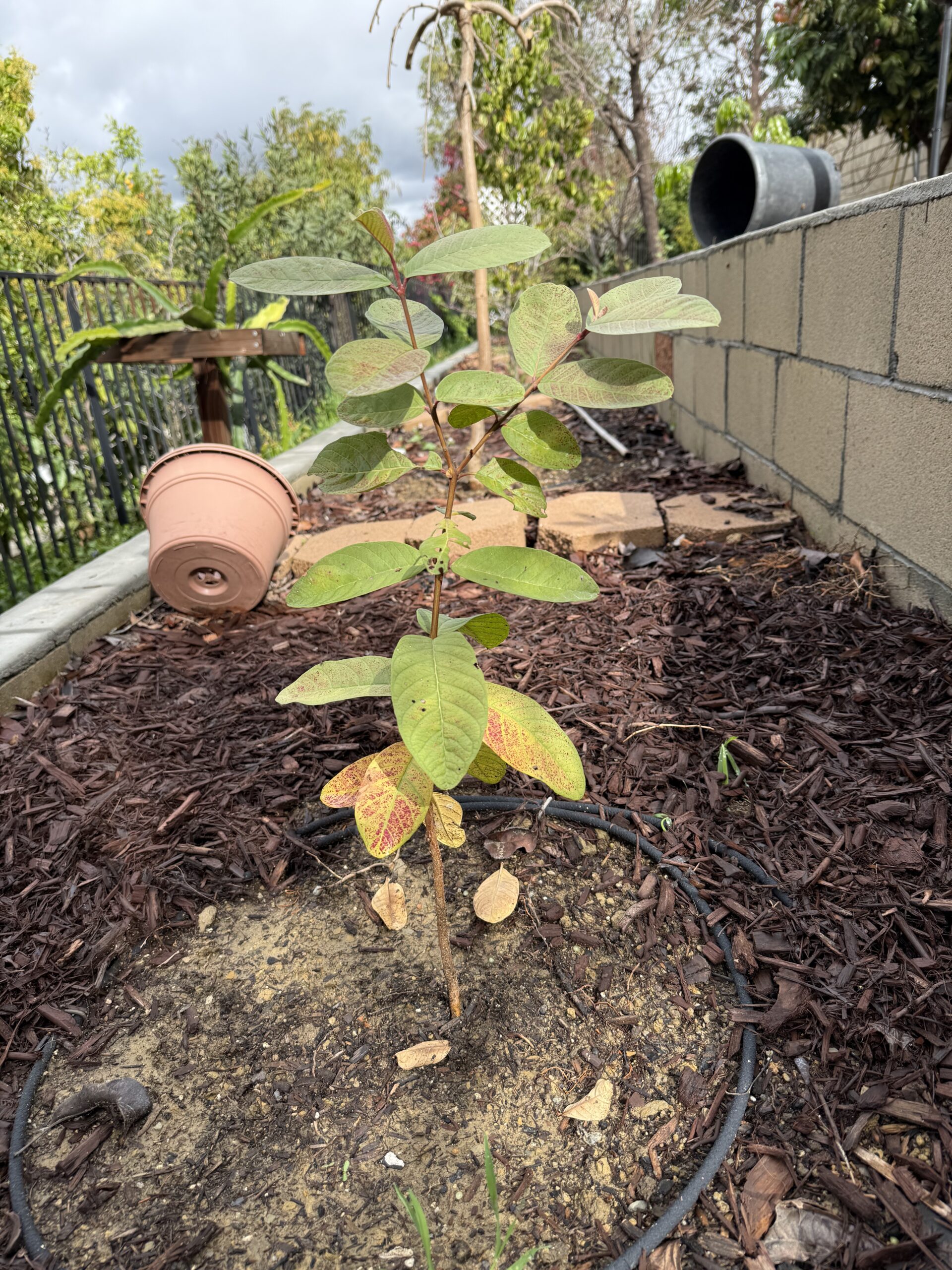
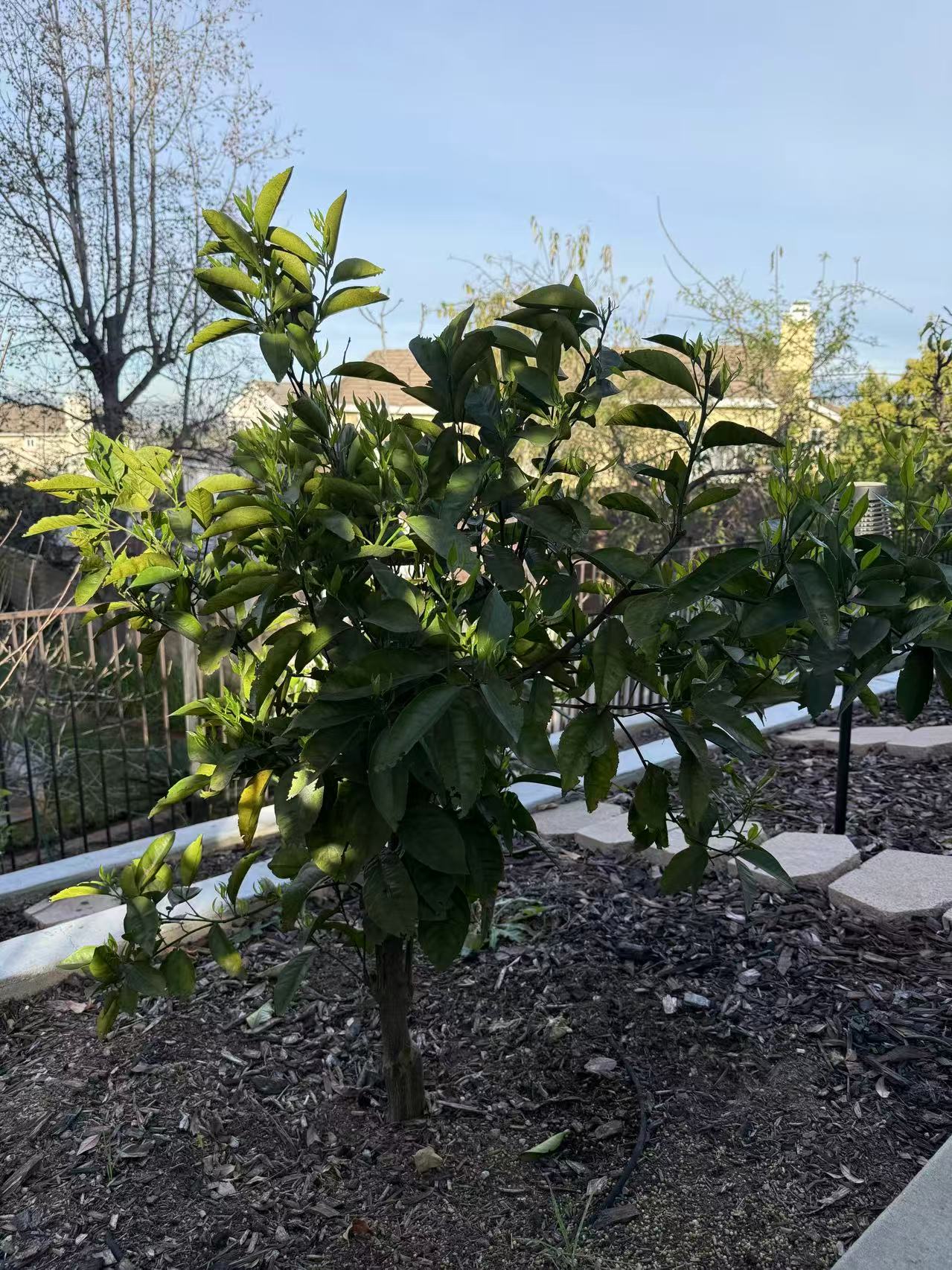
- A Tough 2025: Planted with high hopes in early 2024, it was unfortunately heavily hit by the dual assassins of citrus trees in 2025: leafminers and aphids. The tender new leaves were chewed up and curled, severely stunting its growth progress.
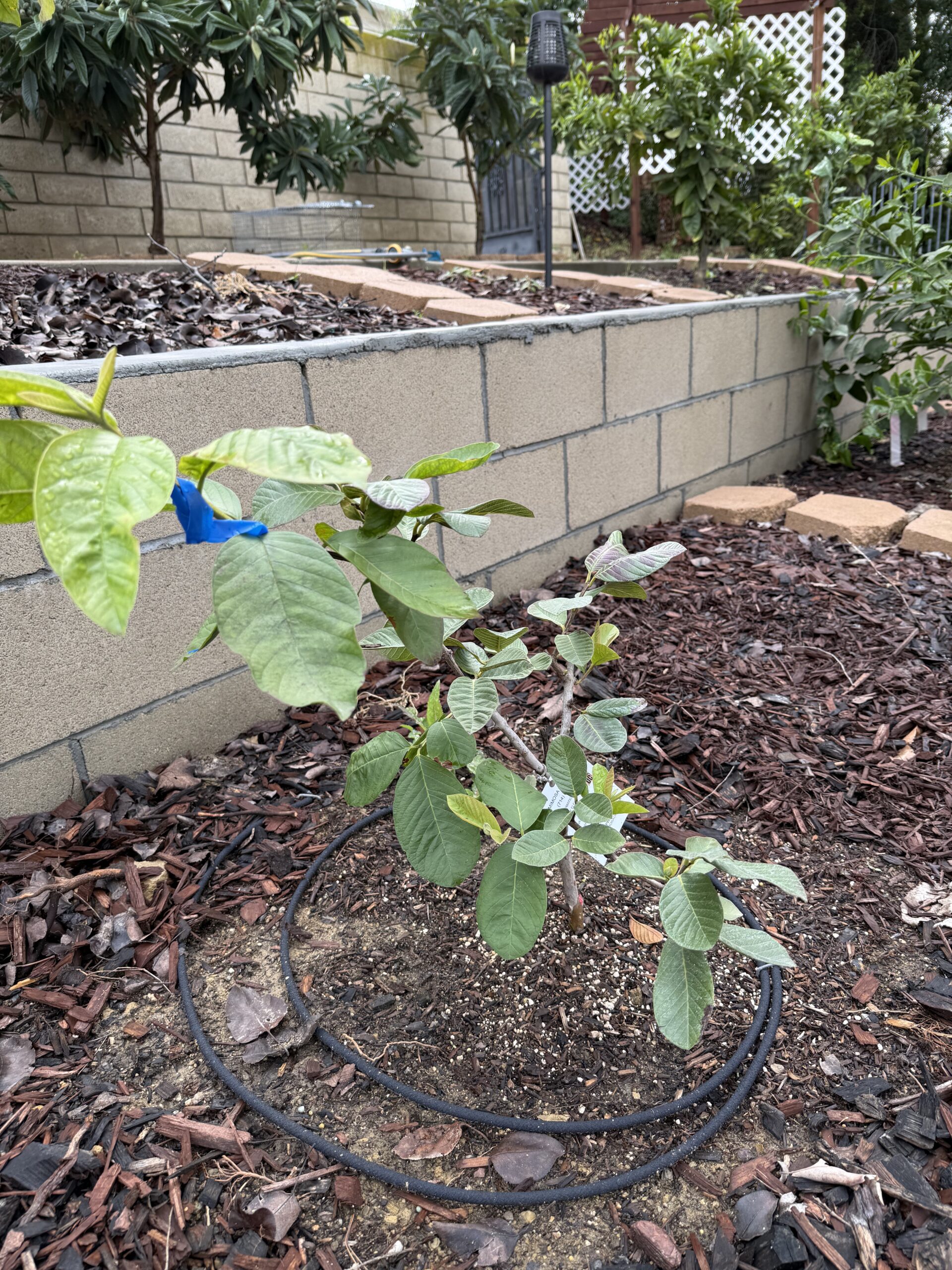
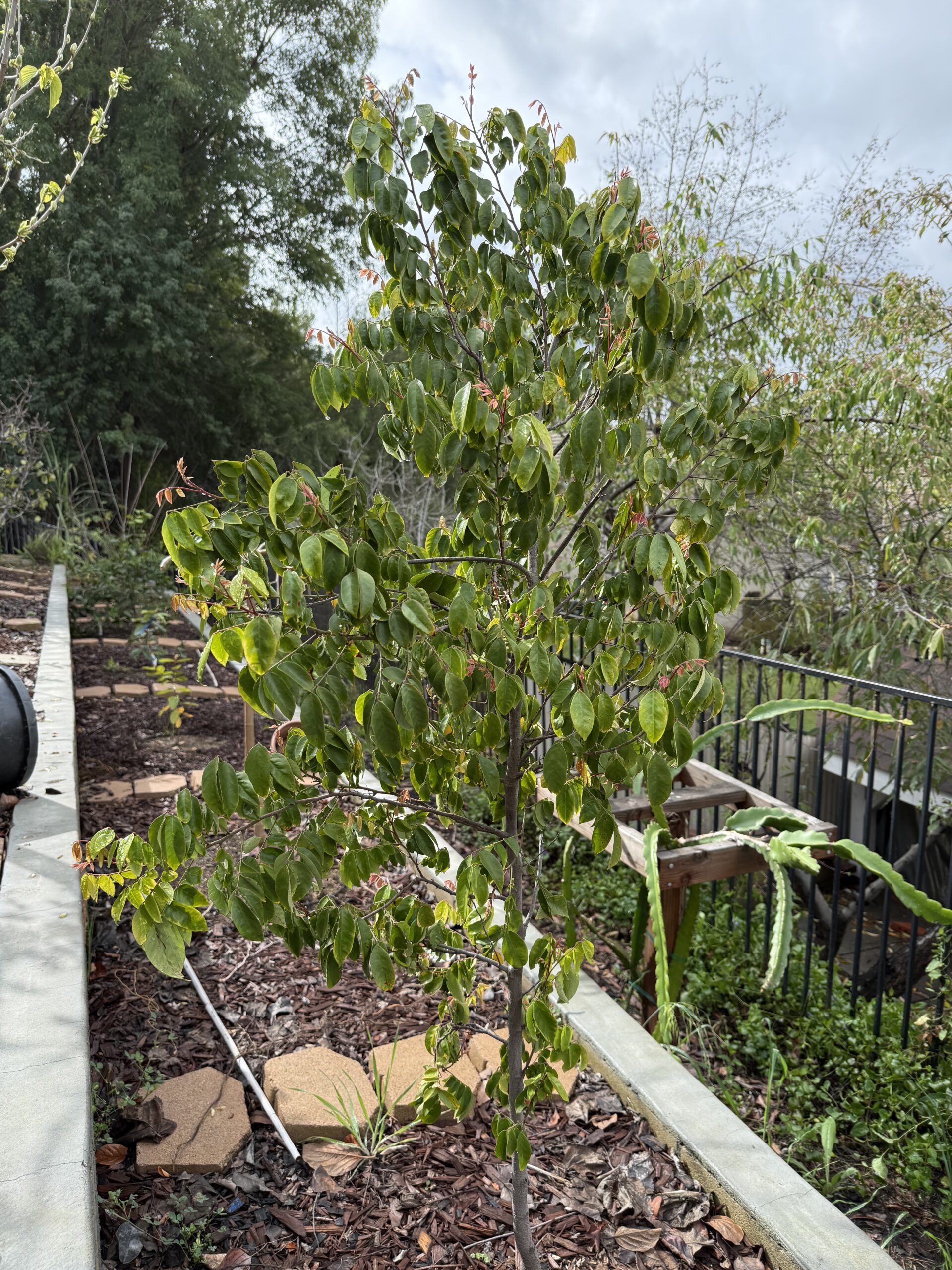
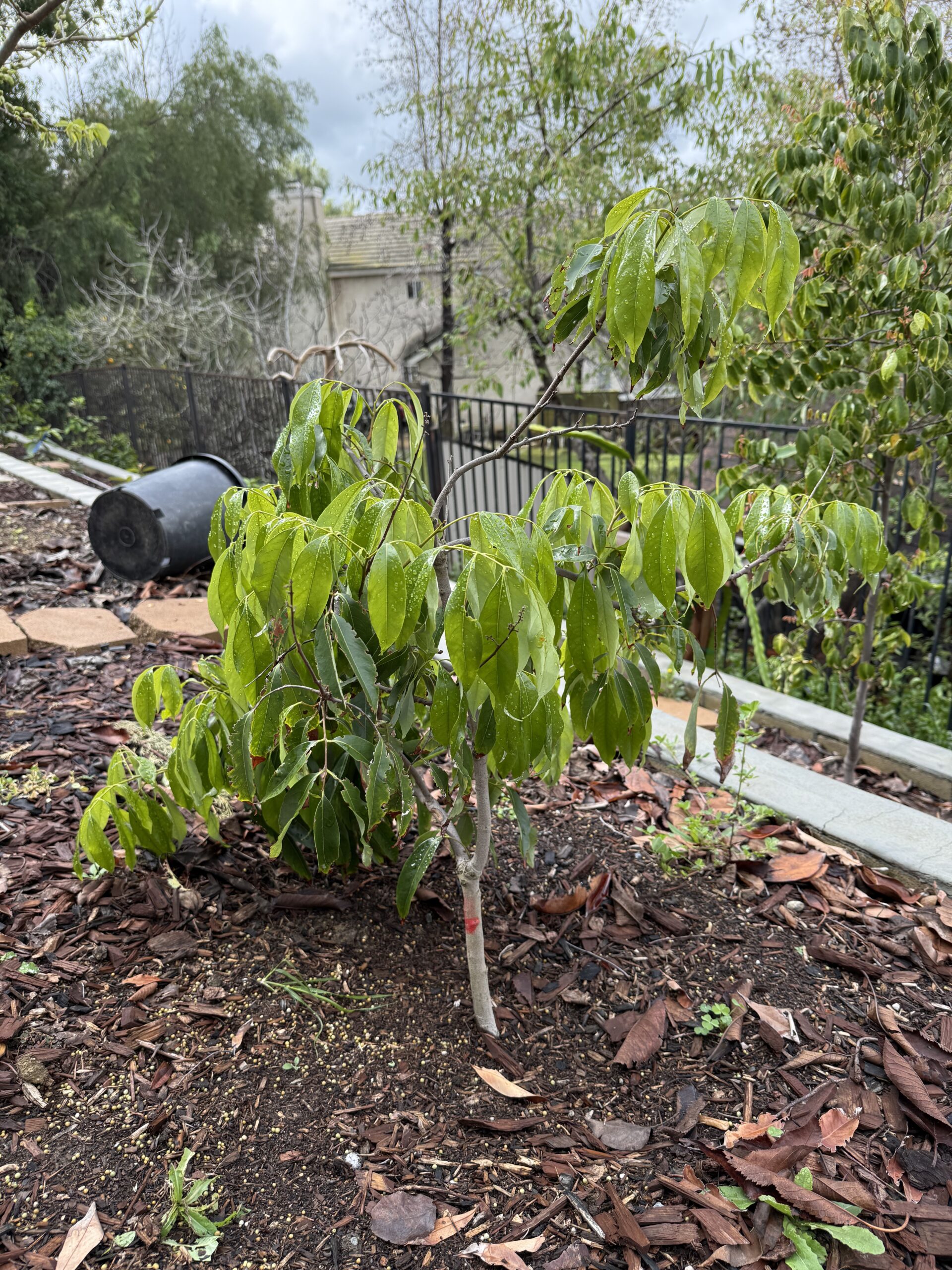
- The Spring Comeback: After a year of laying low, it has finally pushed out a full canopy of vigorous new shoots this early spring (2026). Although the annoying aphids tried to make a comeback, I took preemptive action and sprayed pesticide. Looking at these lush, lively new flushes in the photo, I am confident it will make a full recovery this year.
🛠️ My Care Guide
- Strict Pest Control: This is the make-or-break factor for its comeback this year. Fresh citrus flushes are an absolute feast for aphids and leafminers. During this spring growth spurt, I will maintain a spraying schedule of Neem oil or gentle pesticides every 1-2 weeks, focusing on the undersides of the new leaves, giving the bugs zero chance to return.
- Precision Water & Fertilizer: The circular drip line in the photo is set up perfectly. Because it is recovering and rapidly pushing new leaves, I will keep the soil moisture consistent. I will soon supplement it with organic citrus fertilizer rich in micronutrients (especially iron and zinc), following a “light but frequent” approach to avoid excessive nitrogen, which can attract more aphids.
- Pruning Damaged Leaves: Once this new flush hardens off, I’ll pick a sunny day to prune away some of the old, severely deformed leaves ruined by leafminers last year. This will reduce hiding spots for pests and improve airflow and sunlight penetration through the canopy.