

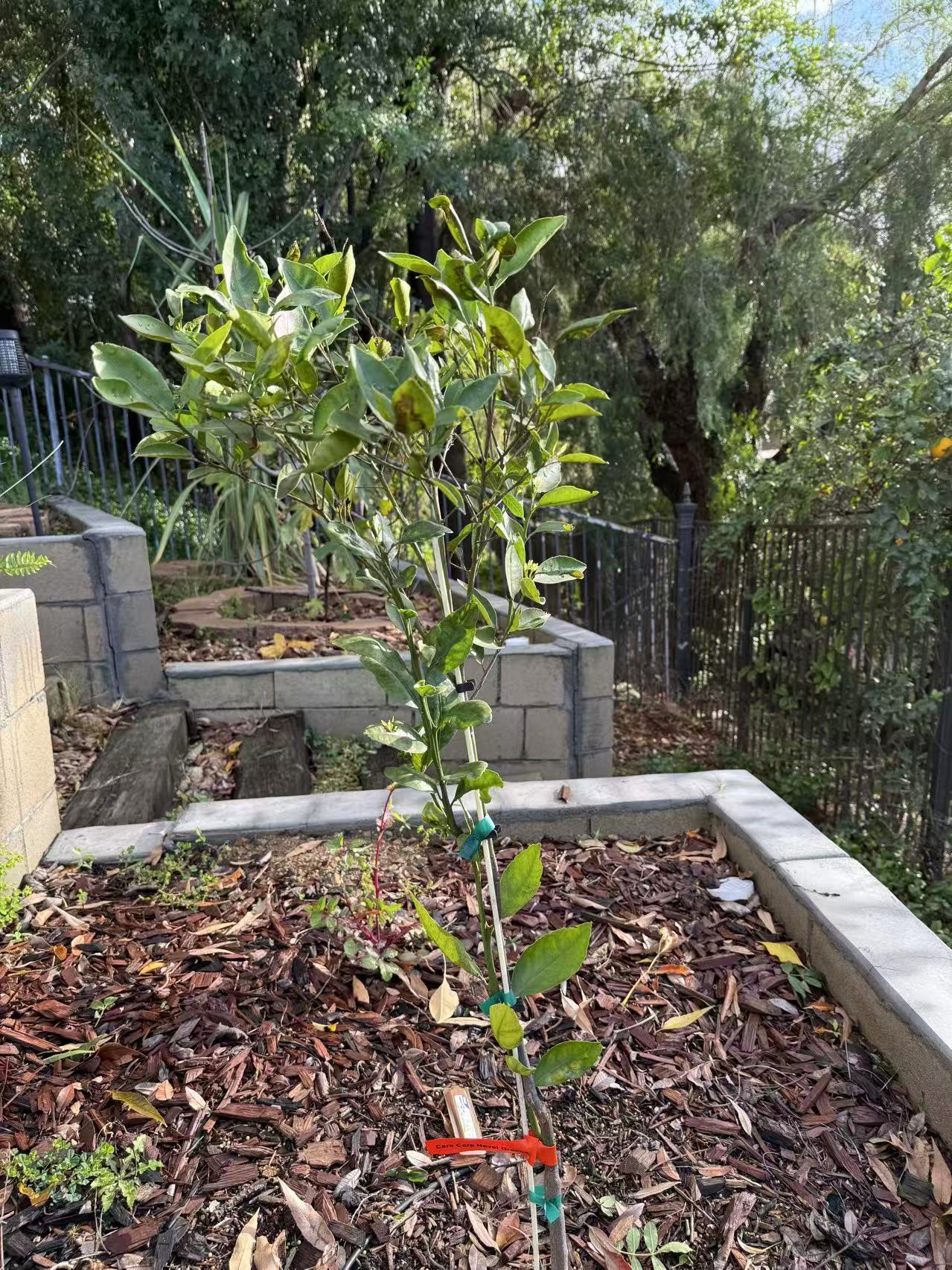
🍊 Plant Profile: Cara Cara Navel Orange
📊 Basic Info
- Variety: Cara Cara Navel Orange
- Planting Date: December 2023
- Source: Four Winds Growers
- Yield Performance: ★☆☆☆☆ (Currently in a recovery phase after pest damage; focusing on vegetative growth)
- Flavor Profile: Famous for its seedless, beautiful pinkish-red flesh. It is exceptionally sweet with much lower acidity than standard oranges, often boasting subtle notes of cherry or blackberry.
📖 Variety Overview
The Cara Cara is a naturally occurring mutation of the Washington Navel orange and is universally beloved in Southern California.
- The Premium Orange: Because its pink color comes from lycopene (the same antioxidant found in tomatoes) rather than anthocyanins (like blood oranges), it doesn’t need freezing winter temperatures to develop its stunning internal color.
- Resilience: The tree is currently showing the classic signs of Citrus Leafminer damage (curled, distorted leaves). While unsightly, young citrus trees are remarkably tough and can bounce back vigorously once their roots are established.
📅 Precise Ripening Months
As a classic winter fruit, it brightens up the orchard when most other deciduous trees are bare:
- Expected Harvest: December to March.
- Peak Quality Month: January and February (Leaving the fruit on the tree into the new year allows the acids to drop completely, resulting in maximum sweetness).
📝 My Gardening Notes
- Premium Start: Sourced from the highly reputable Four Winds Growers in late 2023.
- The Struggle: The growth has been somewhat sluggish, largely due to a heavy Citrus Leafminer infestation last year. The tree spent more energy surviving than growing. However, with the root system now two years in the ground, 2026 is primed to be its comeback year.
🛠️ Care & Maintenance (The 2026 Recovery Plan)
- Leafminer Defense (Crucial): As soon as the first flush of tender, light-green leaves emerges this spring, I will treat the foliage with Neem Oil or Spinosad regularly. Protecting this new flush from the leafminer moth is the #1 priority for growth.
- Leave the Ugly Leaves: Although the curled, damaged leaves from last year look terrible, I will not remove them yet. They are still photosynthesizing and providing vital energy. I will only prune them away once a healthy, new canopy is established.
- Spring Feeding: Once the weather consistently warms and buds swell, I will apply a high-quality organic citrus fertilizer with micronutrients (Iron, Zinc, Manganese) to fuel a massive spring growth spurt.