

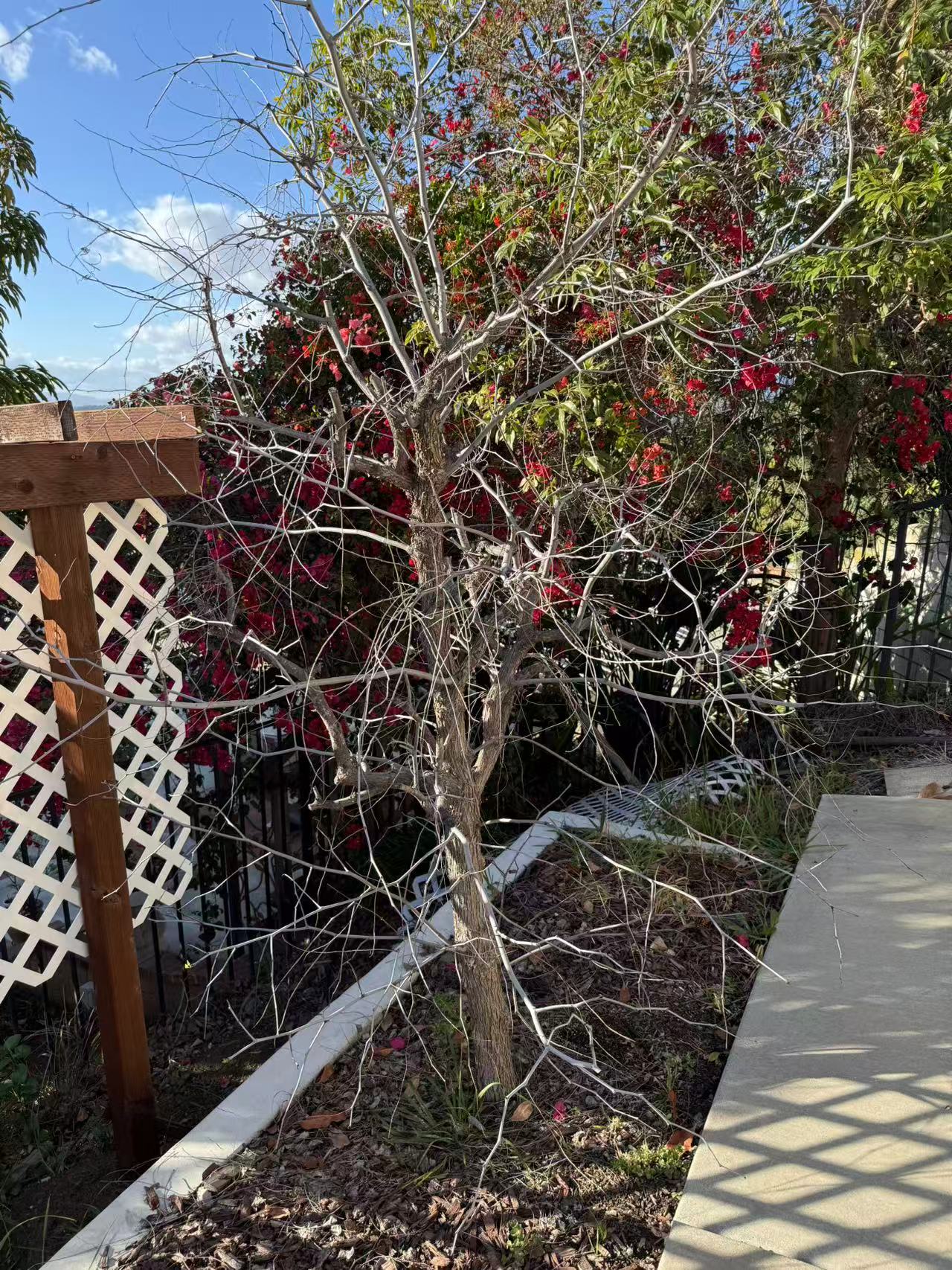
🌳 Plant Profile: Winter Jujube (Dongzao)
📊 Basic Info
- Variety: Winter Jujube (Dongzao)
- Planting Date: Late 2022
- Source: Purchased from Omori Nursery (Big Forest Nursery) for $1,500 as a mature tree
- Yield Performance: ★★★★★ (Being a mature tree upon planting, it has deep roots and offers high, stable yields)
- Flavor Profile: Extremely sweet and crispy with zero acidity; the flesh is fine-textured and premium in quality
📖 Variety Overview
The Dongzao, or “Winter Jujube,” is hailed as the king of jujubes in Northern China.
- Appearance: The fruit is typically smaller than the “Shanxi Li” variety, featuring a round or slightly oblong shape
- Flavor Excellence: It is famous for its “crisp-sweet” profile. Unlike the larger Li jujube, which can be airy, the Winter Jujube has a dense, snapping crunch and intense sugar concentration
- Acclimatization: In the sunny climate of Rowland Heights, this variety thrives, accumulating sugars rapidly due to the significant temperature swings between day and night
📅 Precise Ripening Months
While its name implies “Winter,” the abundant Southern California sun accelerates its growth cycle:
- Primary Harvest Season: Late July to August
- Maturity Gap: In your garden, it ripens about one month earlier than the Shanxi Li variety
- Peak Quality: The fruit is best picked when the skin turns from creamy green to a brownish-red blush
📝 My Gardening Notes
- The Major Investment: This tree was a significant addition to the orchard in late 2022. Because it was planted as a mature tree, it avoided a long establishment phase and began producing high-quality fruit almost immediately
- Variety Comparison: Though the fruits are a size smaller than the Li jujube, the superior sweetness and lack of any sour aftertaste make this the family favorite
🛠️ Care & Maintenance
- Winter Pruning: As seen in its current dormant state, jujubes require structural pruning to remove “water sprouts” and thinning of inner branches to ensure sunlight reaches the center of the canopy
- Water Consistency: To prevent the thin, crispy skin from cracking, it is vital to maintain steady irrigation in July as the fruit sizes up
- Sucker Management: Keep an eye out for root suckers (small shoots emerging from the base) and remove them promptly so they don’t drain energy from the main tree