

🍋 Plant Profile: Australian Finger Lime
📊 Basic Information
- Variety Name: Australian Finger Lime
- Planting Time: Summer 2024
- Yield Performance: ★★★★★ (Extremely vigorous growth; reached an astonishingly high yield in just one year by 2025)
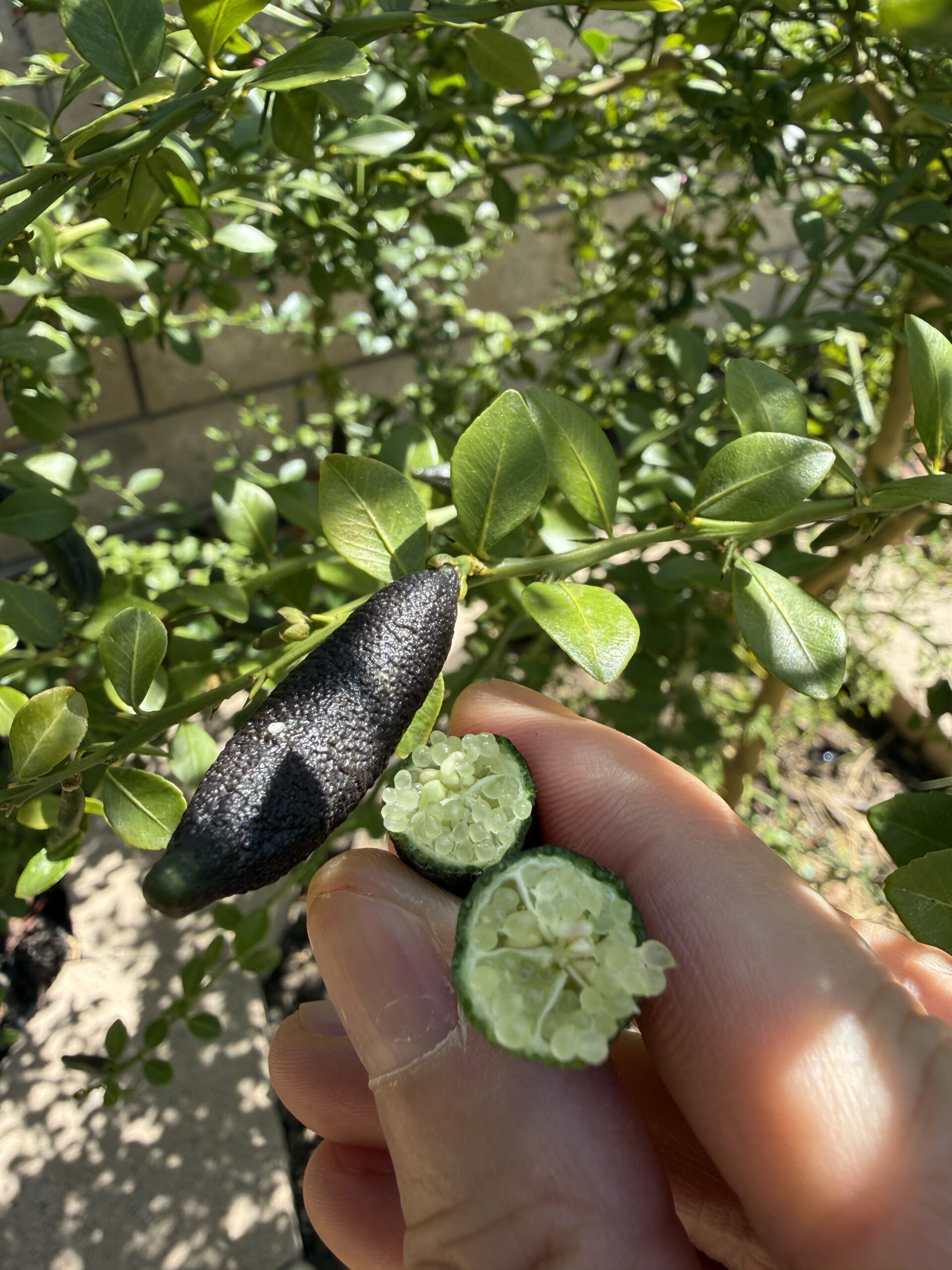
- Taste Characteristics: The flesh consists of crystal-clear, pearl-like vesicles that burst on the tongue like caviar; the acidity is mild and palatable, not as sharp as regular lemons, with an incredibly fresh, exclusive citrus aroma.
📖 Variety Introduction Known as the “caviar of citrus,” the finger lime originally grew in the subtropical rainforests of Australia. Now, it is absolutely one of the most prized and rare varieties I am proud to grow in my orchard.
- Appearance: It has an elongated shape, much like a human thumb. The color transformation of the rind is magical. When it first grows and is unripe, it’s green. As it basks in the abundant sunlight and ripens, it gradually darkens, eventually turning into that highly premium dark green or purplish-black seen in the photo. Once cut open, it’s filled with fragrant “little pearls.”
- Flavor Profile: This is what surprised me the most! It completely overturned my stereotype of lemons being “tooth-achingly sour.” Its tartness is very mild and smooth, making it incredibly delicious even when eaten straight. The sensation of countless juice-filled droplets bursting in the mouth provides a top-tier experience that ordinary citrus simply cannot offer.
- Growth Habit: Although native to the rainforest, it has adapted perfectly to the warm, sunny climate of Rowland Heights. Its branches are covered in sharp little thorns, which act as its natural barrier for self-protection in the wild.
📝 My Planting Record
- An Unexpected High-Yield Champion: I only planted this tree in the summer of 2024. I originally thought this rare fruit would be delicate and slow-growing, but I never expected it to adapt so perfectly to the environment here. By 2025, it directly entered an explosive production phase, with the branches densely packed with dark “little torpedoes.” The yield has far exceeded my expectations.
- A Premium Culinary Garnish: Because of its mild acidity and stunning popping texture, it has now become a regular on my dining table. Whether squeezed over fresh seafood to enhance the flavor, mixed into salads, or simply used to garnish sparkling water, it is an irreplaceable, divine ingredient.
🛠️ My Care Essentials
- Fully Armed Pruning: Because there are many sharp thorns hidden among its branches and leaves, I must wear thick gardening gloves every time I prune it or harvest the fruit. During the winter dormancy period, I prune away crowded, crossing, and weak inner branches to maintain excellent airflow and light penetration within the canopy.
- Water Management: If I want the “caviar” inside to be plump and juicy, water is absolutely essential. During the hot California summers and its crazy fruiting stage, I keep the deep soil moist while also paying attention to drainage to prevent waterlogging and root rot.
- Frequent Light Fertilization: Citrus plants are “heavy feeders,” especially with such a massive yield right now. During the vigorous growth periods in spring and summer, I regularly supplement it with specialized organic citrus fertilizer, especially plenty of potassium. This not only promotes fruit expansion but also helps that green rind perfectly transition to a mature dark color.
- Pest Inspection: Citrus leafminers or aphids occasionally visit citrus plants in Southern California. I frequently inspect its tiny, emerald-green leaves. If I spot any signs of pests, I promptly spray natural Neem Oil to protect it.