

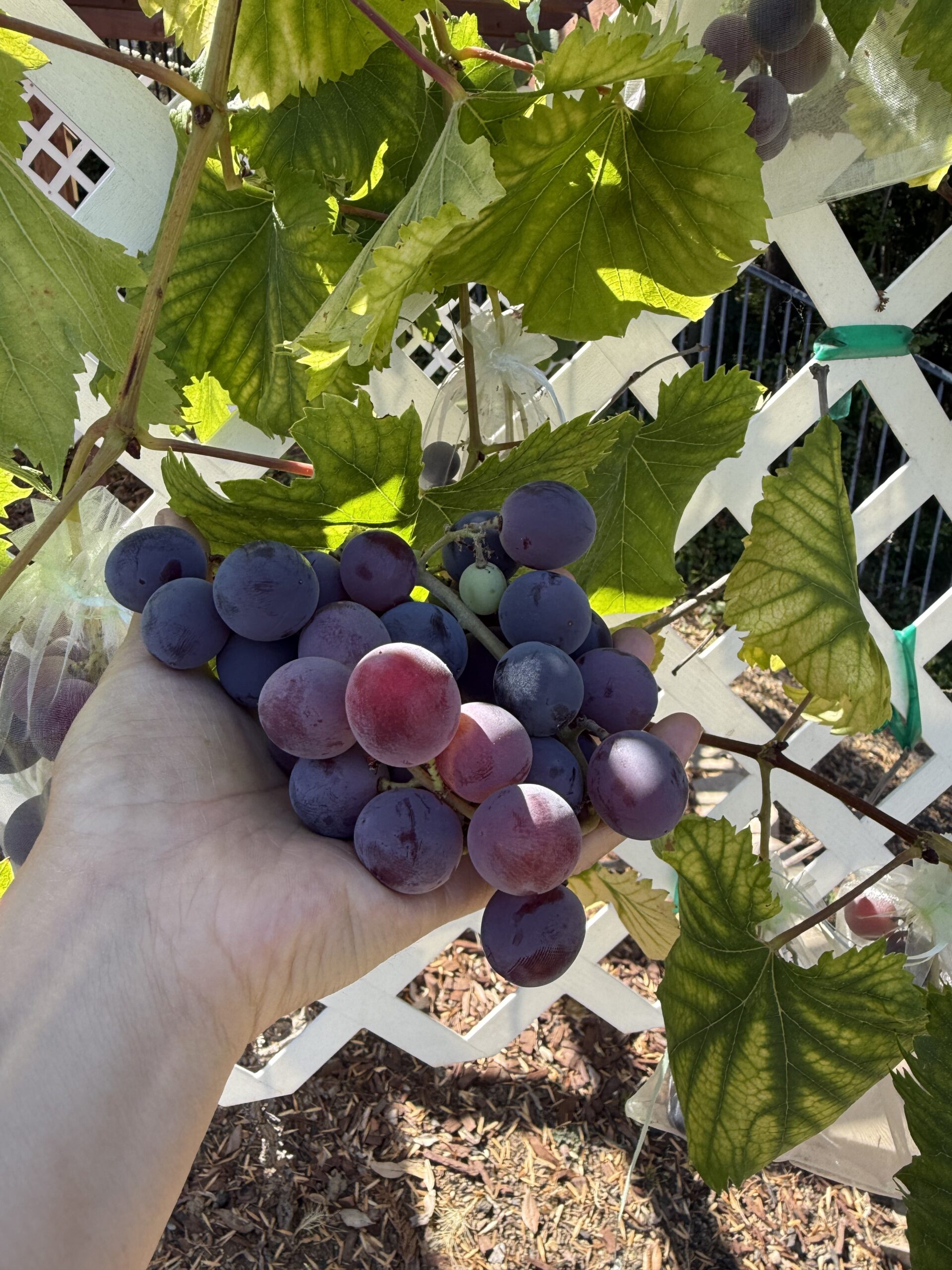
🍇 Plant Profile: Kyoho Grape
📊 Basic Information
- Variety Name: Kyoho Grape
- Planting Time: Spring 2023
- Yield Performance: ★★☆☆☆ (Currently in the vine-growing and energy-storing phase; moderate fruiting in 2025, expecting a massive boom in the future)
- Taste Characteristics: Huge berries, slip-skin, jelly-like soft and juicy flesh, extremely high sweetness with a rich strawberry or “foxy” flavor profile.
📖 Variety Introduction Kyoho grapes are a very classic table grape variety in my orchard, winning my heart completely with their unmatched “size” and “sweetness.”
- Appearance: The berries are exceptionally large, turning purplish-black or purplish-red when fully ripe, with a thicker skin covered in a natural white bloom. The plump, purplish-red clusters I’ve grown perfectly showcase the iconic appearance of the Kyoho.
- Flavor Profile: The skin and flesh separate very easily. After peeling back the slightly tart skin, the inside reveals translucent, bouncy, jelly-like flesh. It’s incredibly juicy and sweet, offering a very unique and rich fruity aroma when eaten.
- Growth Habit: It’s a highly vigorous climbing vine. It stretches out beautifully in the warm, abundant sunshine of Rowland Heights, but I need to ensure it has a sturdy trellis system to support the increasingly massive vines and heavy fruit clusters in the future.
📝 My Planting Record
- Energy-Storing Phase: I planted this Kyoho in the spring of 2023, and by 2025, it successfully started bearing fruit. The current yield isn’t massive just yet, but that’s mainly because the vines are still developing and climbing; they haven’t fully covered my white lattice trellis. Establishing a strong main trunk and root system takes time, and this is a necessary part of its growth journey.
- Promising Future: Grapes are long-lived vines, and the first three years are generally considered the “nurturing” period. As the vines continue to extend and grow much thicker over the next few years, I firmly believe the yield will experience a qualitative leap.
- Meticulous Management: The California sun gives the fruit a stunning color. To protect these hard-won grapes, I specifically wrap them in protective mesh bags to keep birds and insects away. I can clearly see how this careful attention directly translates into a beautiful harvest.
🛠️ My Care Essentials
- Training and Tying: Since the vines are still actively in their growth phase, my most important job right now is guiding the new branches to distribute evenly across the white trellis. I use soft ties to secure the vines, ensuring they have enough space to climb, preventing the leaves from getting too crowded, and maintaining excellent airflow and sunlight penetration.
- Heavy Winter Pruning: I know very well that grape yield and quality heavily depend on winter pruning. Every winter during dormancy (after leaf drop), I have to be ruthless and cut back the vast majority of the current year’s growth, leaving only strong fruiting canes and a few buds. This not only controls the overall shape of the vine but also concentrates the nutrients, allowing for much larger and sweeter grape clusters the following year.
- Fruit Thinning: To guarantee the huge size and premium quality of the individual berries, I must manually thin the clusters after they bloom and during the early fruit development stage, snipping away a portion of the grapes. Even though it’s hard to part with them sometimes, if I don’t aggressively thin the fruit, it will actually lead to smaller berries, uneven coloring, and a drop in overall sweetness.
- Water and Fertilizer: I make sure to provide plenty of water during the spring bud break and the summer fruit expansion phases. In the spring, I apply nitrogen fertilizer to encourage the vines to climb quickly. Then, after blooming and during the fruiting stage, I shift my focus to supplementing phosphorus and potassium, which significantly boosts the grapes’ sweetness and helps them develop that perfect deep color.