🌿 Plant Profile: Gold Nugget Loquat
📍 Basic Information
- Variety Name: Gold Nugget (Eriobotrya japonica)
- Planting Date: Late 2021
- Yield Performance: ★★★★★ (Extremely prolific, bears in dense clusters)
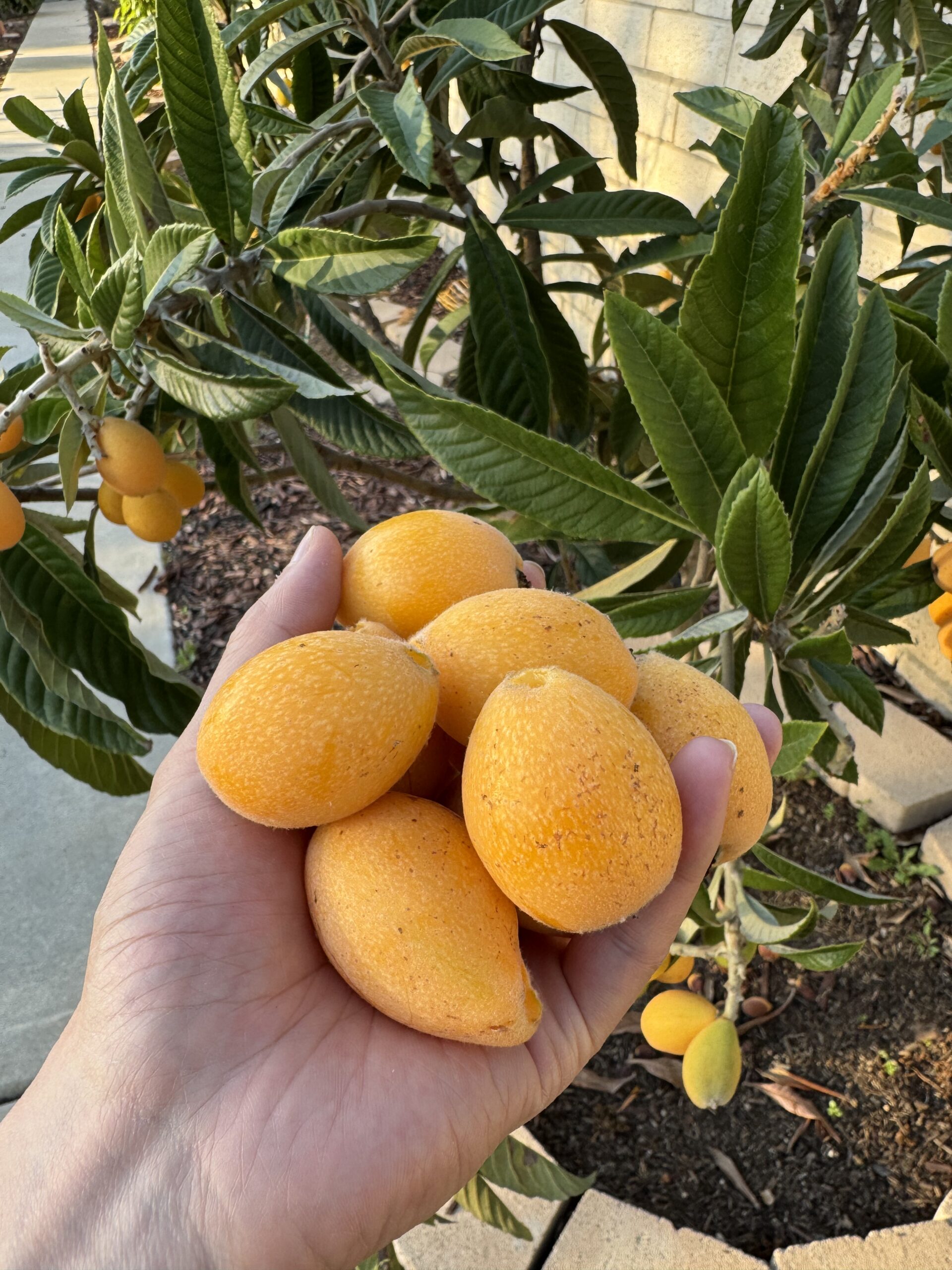
- Flavor Profile: Tart before maturity, honey-sweet when fully ripe, rich flavor, orange-yellow flesh
📖 Variety Introduction
The Gold Nugget loquat is widely regarded by home gardeners as the “gold standard” for cultivation, especially for those who prefer a bold, intense fruit flavor.
- Flavor Comparison: Unlike the milder sweetness of the Big Jim variety, Gold Nugget features a dynamic sugar-to-acid ratio. Once the skin turns a deep orange-yellow and softens slightly, the acidity vanishes, replaced by a deep, high-brix sweetness and a rich aroma.
- Fruit Morphology: The fruit is rounded to short-oval in shape and medium-sized (slightly smaller than Big Jim). Its skin is relatively thick and resilient, making it more durable for storage and less prone to bruising compared to other varieties.
- Growth Habit: The tree has a compact growth habit with strong branching and large, leathery evergreen leaves that offer high ornamental value.
📓 My Planting Records
This tree joined the orchard in late 2021. While the individual fruits may not be the largest, it produces the most “robust” flavor in the entire garden.
- Climate Adaptation: It has performed exceptionally well under the intense sun of Rowland Heights. Even during high summer temperatures, its thick foliage provides excellent resistance to sunscald.
- Growth & Yield: The productivity is staggering; a single flower cluster often yields over a dozen fruits. Compared to the Big Jim in my orchard, the Gold Nugget shows much more explosive yield potential.
- Harvesting Insights: Growing this variety requires patience. Early-season tasting often reveals a sharp tartness, but waiting until the skin transitions from bright yellow to a deep orange rewards you with a stunning “sweet-after-sour” honeyed flavor.
🛠️ Maintenance Essentials
- Strict Thinning: Because Gold Nugget is so prolific, it is prone to “biennial bearing” (heavy yield one year, low yield the next). I thin out about 1/2 of the small fruits in each cluster during the young fruit stage to ensure quality and prevent branches from breaking.
- Water & Split Control: During the spring ripening period, heavy rains can cause the thick skins to split. Therefore, I maintain consistent soil moisture during the color-turning stage to avoid sudden water intake after a dry spell.
- Determining Ripeness: Don’t judge by color alone; use the “squeeze test.” When the fruit changes from firm to slightly soft, it is the signal that the acidity has fully receded and the sugar levels have peaked.
- Pest & Disease Management:
- Fungal Protection: During the California rainy season (November to February), watch for fungal infections on leaves and fruit; apply anti-fungal treatments if necessary.
- Bird Protection: Due to its high sugar content and strong aroma, it is a prime target for birds and squirrels. I recommend bagging the fruit as soon as it begins to change color.