

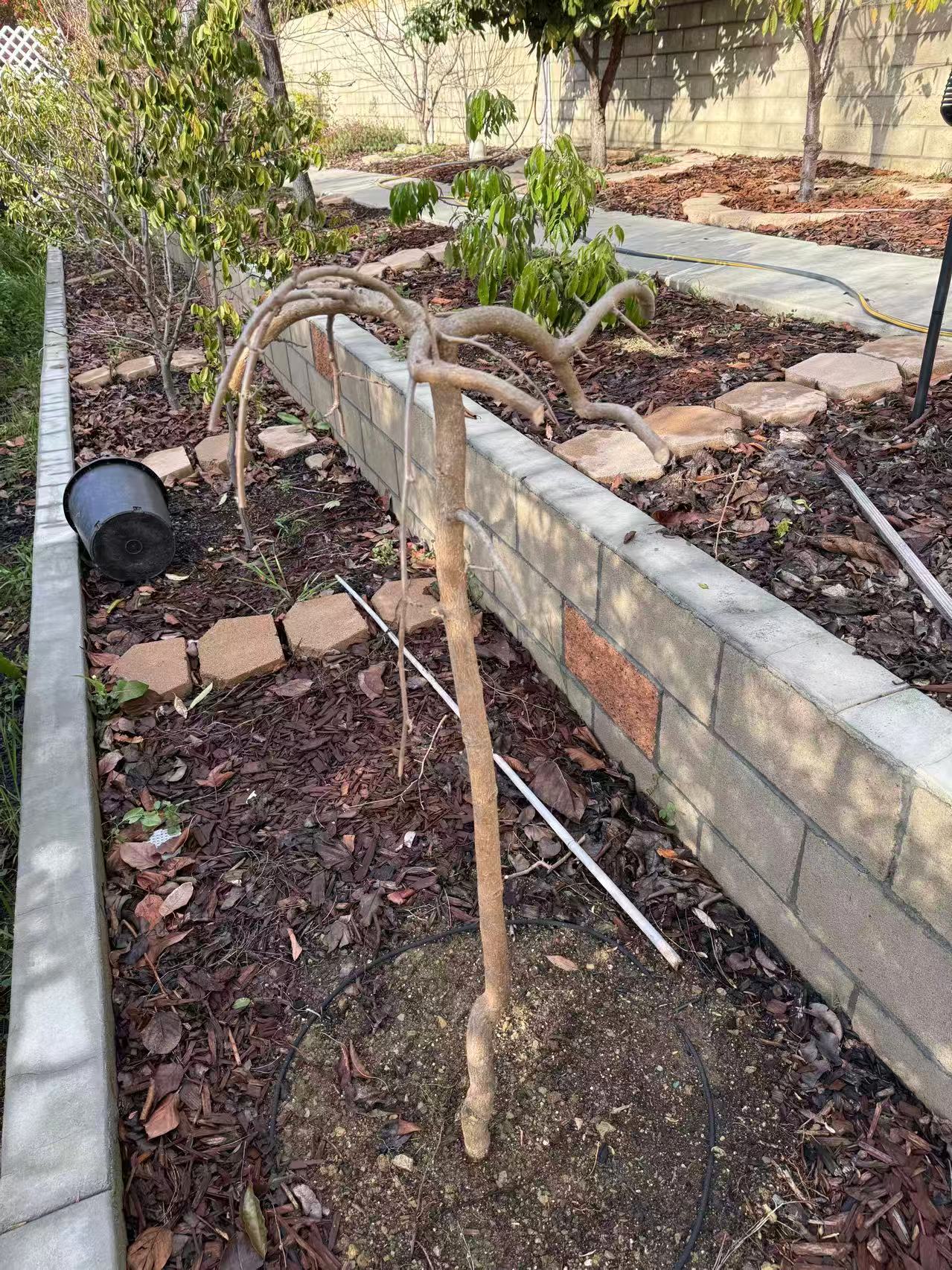
🍇 Plant Profile: Taiwan Mulberry
📊 Basic Info
- Variety: Taiwan Mulberry (Appears to be a Weeping variety)
- Transplant Date: January 2026 (Relocated within the orchard)
- Yield Performance: ★☆☆☆☆ (Currently in intensive care/recovery after transplant root shock)
- Flavor Profile: Produces small, plump berries. Unlike the purely sweet Pakistan Mulberry, this variety offers a complex, slightly tart, and deeply rich berry flavor.
📖 Variety Overview
Adding a Taiwan Mulberry to complement your existing Pakistan Mulberry is a brilliant move that diversifies both the aesthetic and the flavor profile of your spring harvests.
- Appearance: The photo reveals a beautiful, serpentine trunk with cascading, umbrella-like branches. Even while dormant, its “weeping” architectural form looks like a deliberate bonsai piece.
- Flavor Contrast: While the Pakistan variety provides straightforward sweetness, the Taiwan mulberry’s sweet-tart balance makes it far superior for snacking if you enjoy complexity, and it’s absolutely perfect for jams.
- Resilience: Mulberries are renowned for their bulletproof nature. With the proper dormant-season care you’ve provided, it has an incredibly high chance of bouncing back.
📅 Precise Ripening Months
Mulberries are among the very first fruits to herald the arrival of spring in Southern California:
- Bud Break: Expected around early March.
- Expected Harvest: April to May.
- Ripeness Cues: The berries ripen quickly. Wait until they turn from red to a deep, dark purple-black and practically fall off into your hand when touched.
📝 My Gardening Notes
- Orchard Rearrangement: Relocated in January 2026 while deep in dormancy to better fit the garden’s layout.
- Proactive Pruning: Acknowledging the inevitable root damage from the move, I heavily pruned the canopy. This classic horticultural technique prevents the damaged roots from being overworked when spring arrives, setting the stage for a strong recovery.
🛠️ Care & Maintenance (Post-Transplant Recovery)
- Strict Moisture Control: Without leaves to transpire water, the tree’s water needs are currently near zero. Keep the mulched soil just barely moist to encourage root healing without causing rot.
- Zero Fertilizer: The injured roots cannot process nutrients right now. Absolutely no fertilizer should be applied until the tree has pushed out a robust canopy of new green leaves later in the spring.
- Watch for the Wake-Up: Around March, I’ll be closely inspecting the nodes along those weeping branches for tiny green swelling buds—the ultimate sign of a successful transplant.