

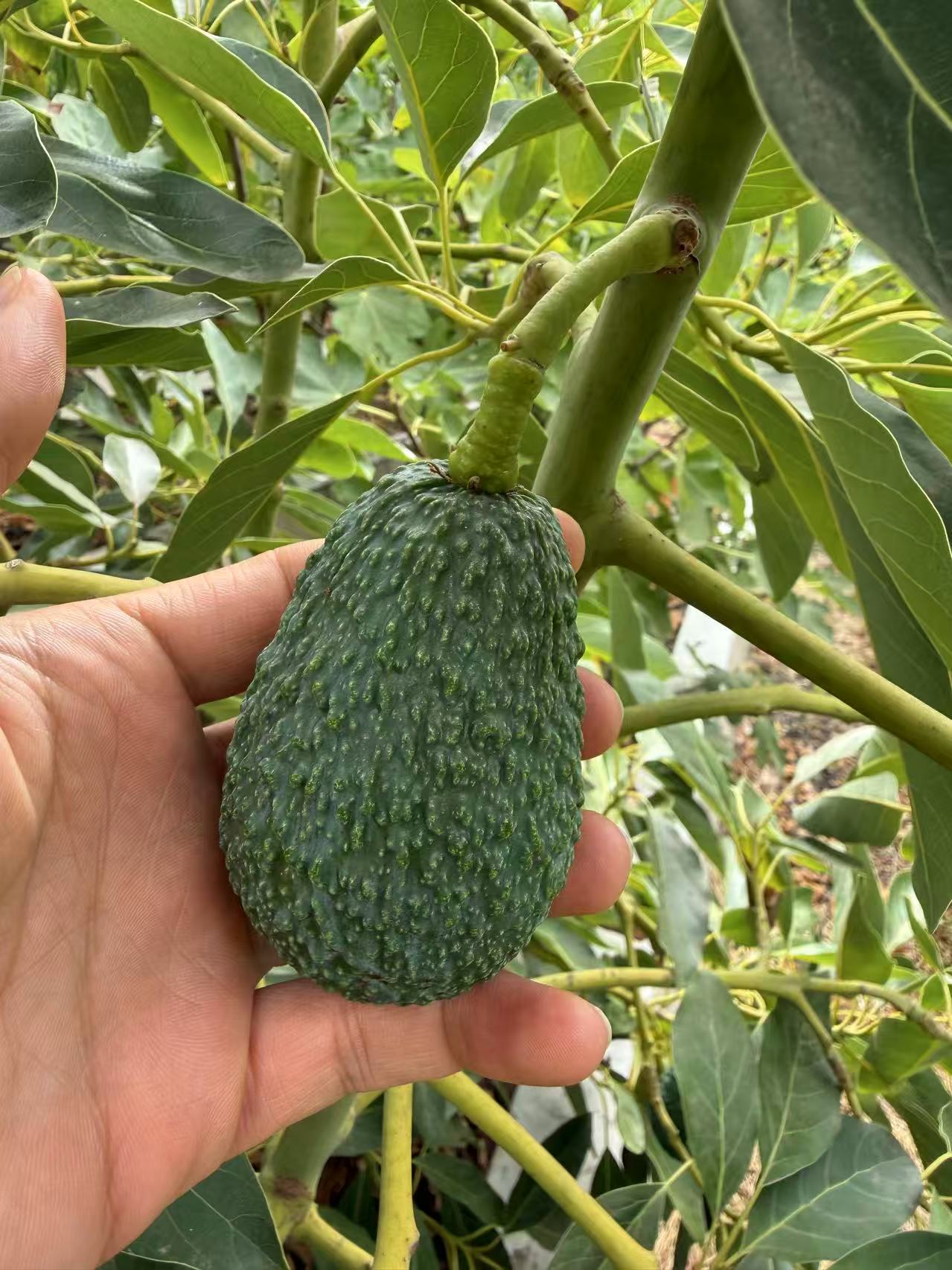
🥑 Plant Profile: Hass Avocado
📊 Basic Information
- Variety Name: Hass Avocado
- Planting Time: Spring 2022 (planted simultaneously with the Fuerte for cross-pollination)
- Yield Performance: ★★★☆☆ (Still a young tree, steadily establishing its production)
- Taste Characteristics: Extremely rich, creamy texture with a classic nutty aroma; the most popular variety in the world.
📖 Variety Introduction The Hass is the “king” of the avocado world and serves as the perfect partner for the Fuerte in my orchard.
- Appearance: Unlike the smooth green skin of the Fuerte, the Hass has a bumpy, pebbled texture similar to alligator skin. The skin transitions from green to deep purple or black as it matures, making it very easy to judge ripeness by color.
- Flavor Profile: Its flesh is dense and oily when ripe, with a high fat content. Whether mashed into guacamole or sliced fresh, its rich, buttery flavor is top-tier.
- Growth Habit: Hass is a Type A flowering variety. It grows vigorously in the Rowland Heights sunshine but is slightly more sensitive to frost than the Fuerte.
📝 My Planting Record
- The Perfect Neighbors: To solve the common issue of avocado pollination, I specifically planted this Hass near my Fuerte in the spring of 2022. This “A + B” combination ensures they cross-pollinate during their bloom cycles, making the yields for both trees much more reliable.
- Growing in Sync: Watching these two trees take root, sprout, and fruit at the exact same time gives my orchard management a great sense of rhythm and order.
🛠️ My Care Essentials
- Height Control: Just like my strategy for the Fuerte, I keep this Hass pruned to under 2 meters (6.5 feet) for easy harvesting and to save space.
- Precision Watering: Hass trees are very sensitive during the flowering and fruit-set stages. I use a careful irrigation schedule to ensure the roots are never too dry yet never waterlogged.
- Nutrient Strategy: During the growing season, I regularly apply organic citrus and avocado fertilizer. Since the trees are close together, I ensure nutrients are balanced so they don’t have to “compete” for food.
- Monitoring Ripeness: While I watch the Fuerte for texture, I rely on the color of this Hass; once it turns black and feels slightly soft to the touch, it’s time to enjoy the harvest.